
Equine ICU in Tucson
At Jackpot Veterinary Center, protecting the health of every horse on our property is a top priority. When a horse is diagnosed with, or suspected of having a contagious disease, they are immediately moved into one of our specially designed ICU stalls.
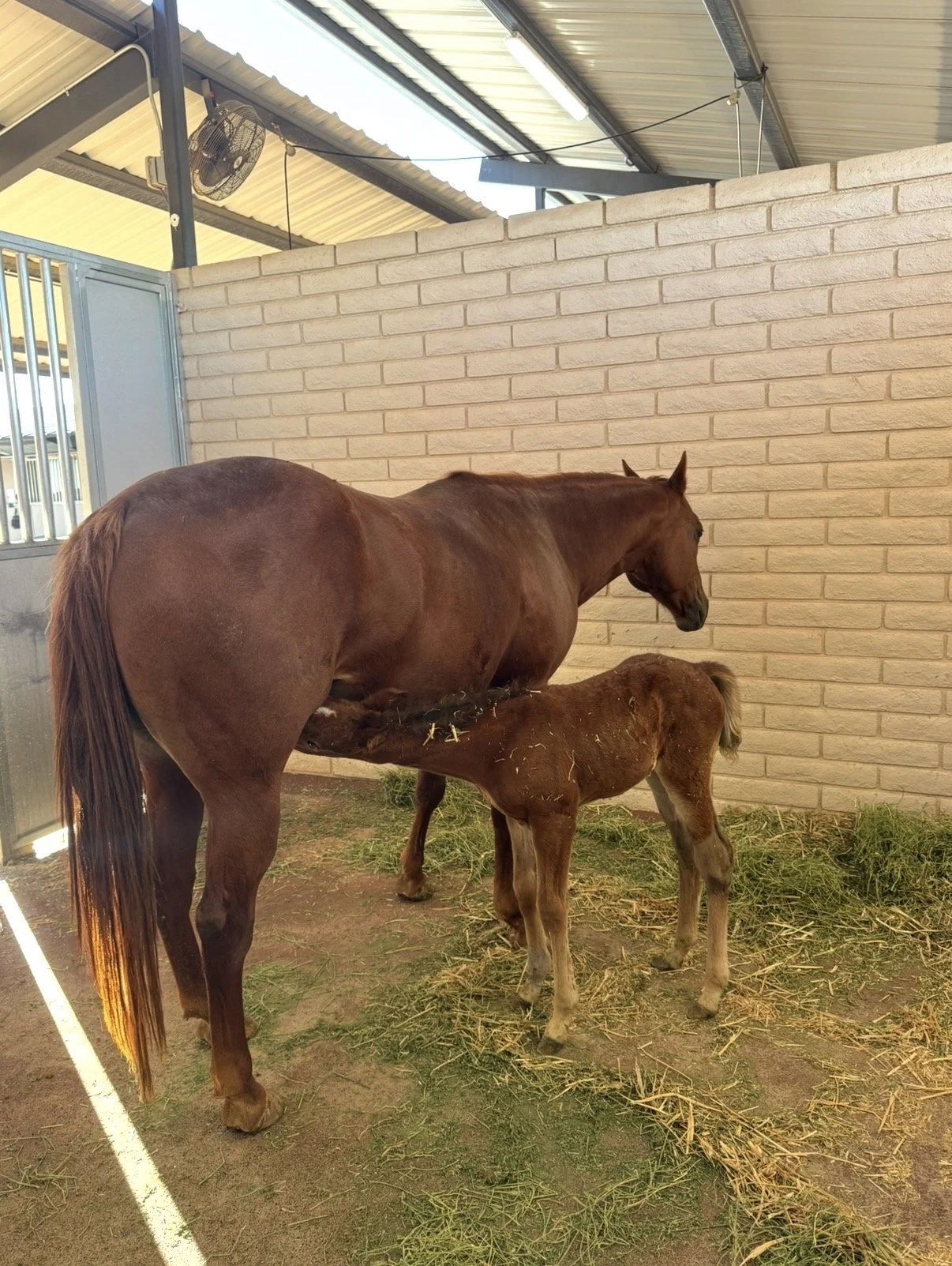
A mare and foal in ICU at Jackpot Veterinary Center
Jackpot’s ICU stalls are different than other standard equine stalls, here’s why that matters:
1. Non-Porous, Fully Sealed Surfaces
The walls are coated with a non-porous, medical-grade paint that prevents bacteria and viruses from absorbing into surfaces.
Stall floors are lined with a seamless, cushioned flooring system that eliminates cracks and crevices where pathogens could hide.
These surfaces allow us to perform complete, thorough disinfection between patients.
2. Dedicated Drainage System
ICU stalls have a stall-front drainage system that is isolated from the rest of the hospital.
This prevents contaminated wash water from spreading infectious material to other areas of the property.
Only the ICU stalls use this drainage design, adding a critical level of containment.
3. Controlled Buffer Zone
The area directly in front of the ICU stalls serves as a biosecurity buffer zone
This space is used for:
ICU supply carts
PPE (gowns, gloves, boot covers, etc.)
Only trained team members can cross from the buffer into the stall.
4. Restricted Owner Access for Safety
Once a horse is placed in an ICU stall, owners are asked to keep their distance.
This helps protect both owners and other horses on the property, and allows our team to maintain strict biosecurity integrity.
5. Staff Trained in Advanced Biosecurity Protocols
Only designated and trained team members handle ICU patients.
Staff:
Dress in appropriate PPE before entry
Follow step-by-step decontamination protocols on exit
Dispose of or disinfect equipment safely
These measures protect other patients, staff, and your horse.
6. Intensive Cleaning and Testing Before Reuse
After an ICU patient leaves the stall, a multi-step sanitation process begins:
Initial deep cleaning with disinfectants at correct contact times
Rinse and repeat cycles to ensure all surfaces are clean
Final bacterial swab testing of the stall
The stall is only cleared for a new patient once it tests clean
This ensures no lingering contamination and maintains the safety of all hospitalized horses.
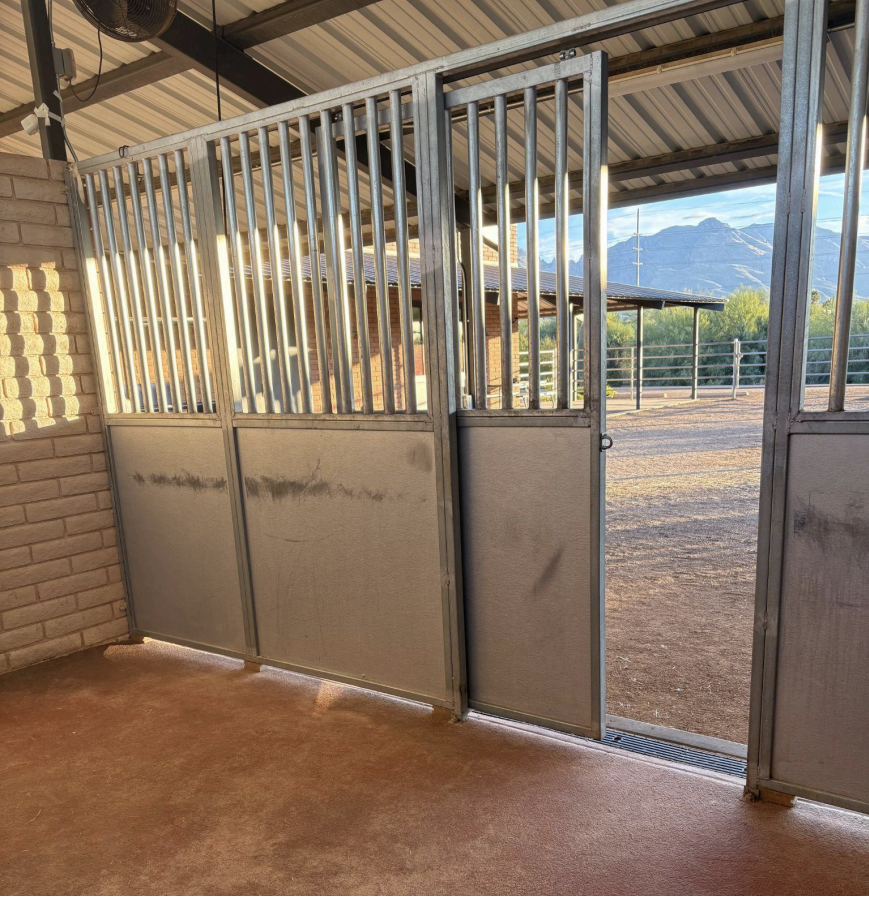
Equine ICU stall at Jackpot Veterinary Center
Coming Soon! Advanced Veterinary Diagnostics including ultrasound and CT for large and small animals!