
When your horse is scheduled for surgery, it’s completely normal to have questions. What can they eat? When do they need to arrive? How long will they stay? And what should you have ready for when they come home?
While every procedure and every horse is different, a little preparation can help surgery day go more smoothly. At Jackpot Veterinary Center, our equine surgical team will give you specific instructions based on your horse’s procedure, health, and anticipated recovery.
Follow Feeding and Fasting Instructions Carefully
One of the most important things you can do before your horse’s surgery is follow the feeding instructions provided by your veterinary team.
Depending on the procedure, your horse may need to fast the night before surgery or have dietary changes beginning several days in advance. These instructions aren't just a precaution. They can directly affect whether a procedure can be performed safely and as scheduled.
For example, during certain laparoscopic procedures, such as surgery for a cryptorchid horse, a camera is inserted into the abdomen so the surgeon can visualize and access the surgical area. If the gastrointestinal tract is too full, it may limit visibility and prevent the surgeon from safely completing the procedure.
If you're unsure about when to stop hay, grain, supplements, or other feed, ask before making changes. Follow the instructions provided specifically for your horse rather than applying general fasting guidelines.
Plan to Arrive Before Surgery Day
For scheduled equine surgery at Jackpot Veterinary Center, horses typically arrive at the hospital the day before their procedure.
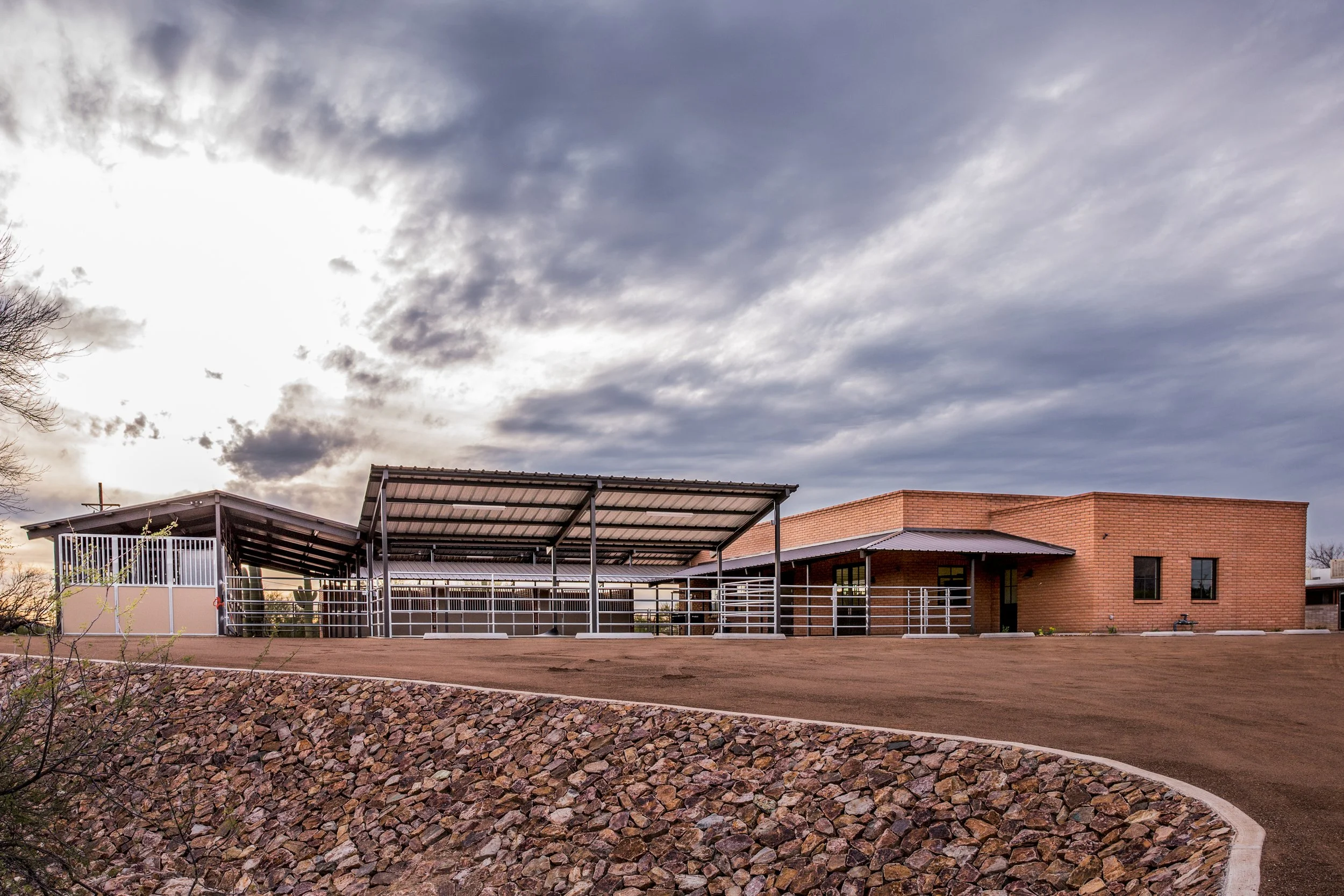
Jackpot Veterinary Center, Large Animal Hospital
Coming in early gives your horse time to settle into their new environment before surgery. It also gives our veterinary and anesthesia teams time to prepare your horse, review their medical information, and complete any necessary preoperative care.
If your horse is being referred to Jackpot by another veterinarian, our team can also communicate with your regular veterinarian about the case, available diagnostics, treatment, and follow-up care.
Make Sure Tetanus Protection Is Current
Tetanus vaccination is particularly important for horses undergoing surgery because surgical incisions create a potential route of exposure to the bacteria that cause tetanus.
Your horse's tetanus vaccination will need to be current. If a booster is needed, our team can administer it as part of your horse's care.
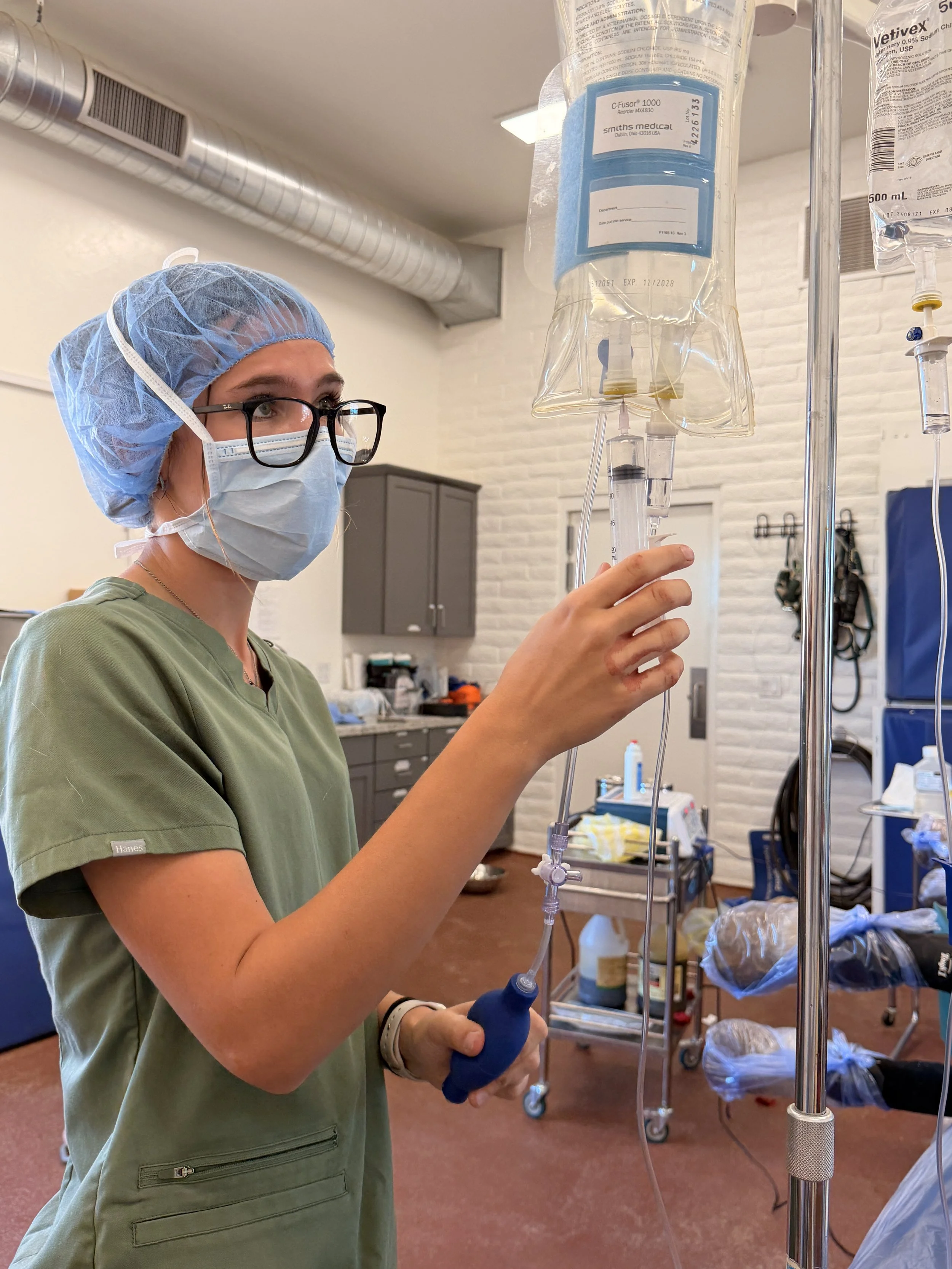
Veterinary technician, Taylor, monitoring anesthesia
If you're not sure when your horse last received a tetanus vaccine, let us know. For referral patients, vaccination records can also be coordinated with your regular veterinarian.
Start Thinking About Recovery Before Surgery
It may seem early to think about discharge before your horse has even had surgery, but having a recovery plan ahead of time can make the transition home much easier.
Depending on the procedure, your horse may need a clean, dry, enclosed stall for recovery. Stall rest, medications, bandage care, exercise restrictions, hand walking, dietary changes, or follow-up appointments may also be part of the recovery plan.
If an appropriate recovery space isn't available at your home or barn, this is something to consider before surgery. Some owners may choose to arrange temporary boarding at a facility that can accommodate their horse's recovery needs.
Your horse may also need to remain hospitalized at Jackpot after surgery. Our Tucson equine hospital can accommodate horses needing overnight or extended hospitalization for monitoring, treatment, and post-surgical recovery.
Remember: Going Home Doesn't Mean Going Back to Work
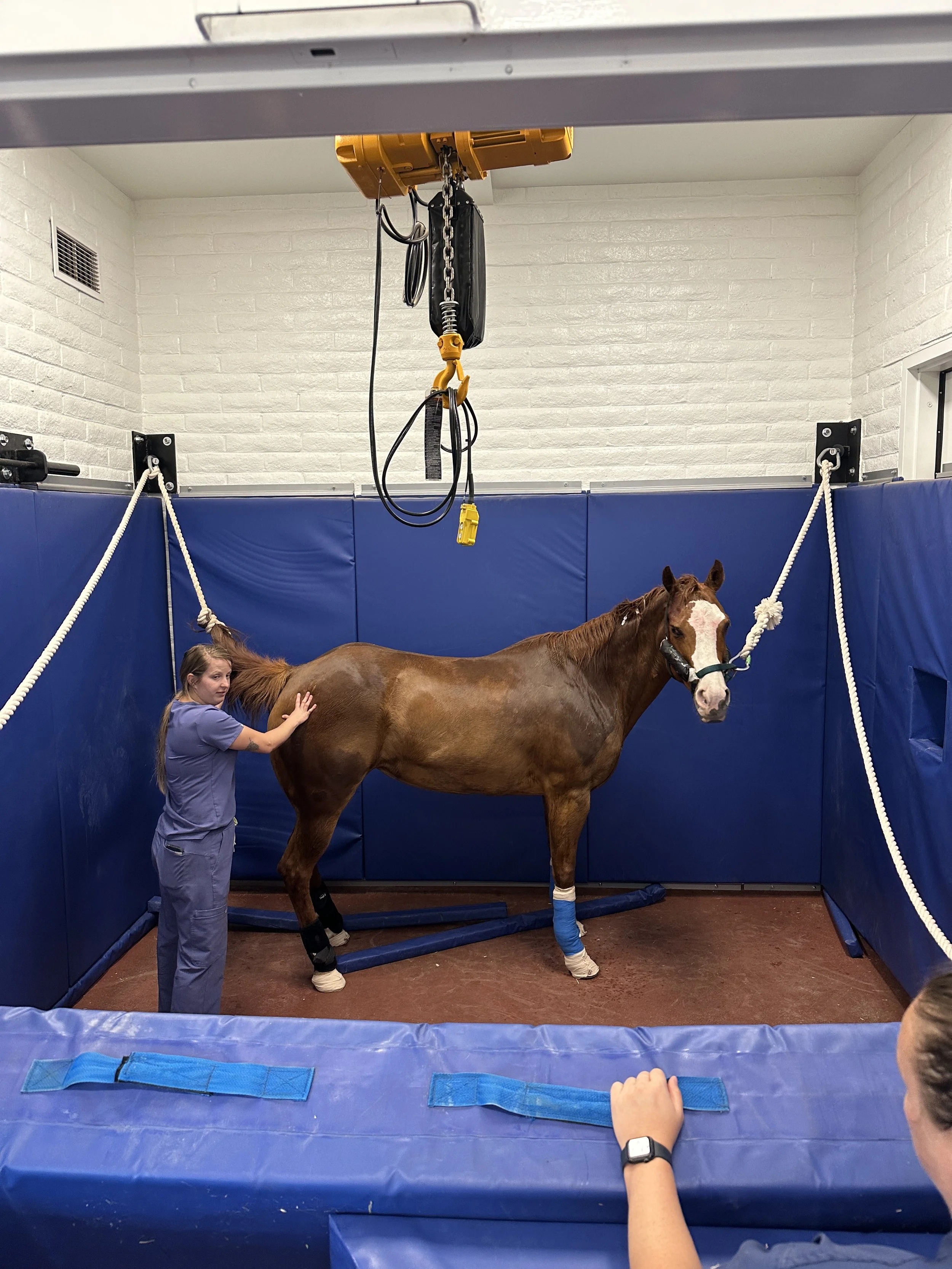
Brown mare in a padded surgery recovery room
One of the biggest things to prepare for is patience.
Surgery and anesthesia can take a lot out of a horse, and healing takes time. Being discharged from the hospital doesn't necessarily mean your horse is ready to return to turnout, riding, training, or their normal routine.
Recovery recommendations will depend on the procedure and your horse's individual progress. Following those recommendations is an important part of protecting the work that was accomplished during surgery.
Before discharge, our team will review your horse's instructions with you. We encourage you to ask questions — even the ones that may feel small. We want you to understand what medications to give, what your horse can eat, how much they can move, what their incision or surgical site should look like, when they'll need a recheck, and what changes warrant a call to the veterinarian.
Preparing for Equine Surgery in Tucson
Knowing your horse needs surgery can feel overwhelming, but you don't have to figure out the process on your own.
At Jackpot Veterinary Center, our equine surgical team provides care through the different stages of treatment, from preoperative preparation and surgery to hospitalization, recovery, and follow-up. For referral patients, we also collaborate with the referring veterinarian to help maintain continuity of care after your horse leaves the hospital.
Most importantly, follow the instructions provided for your horse and their specific procedure. If something isn't clear, ask. Good preparation before surgery gives your horse and their veterinary team the best possible starting point for the procedure and the recovery ahead.