
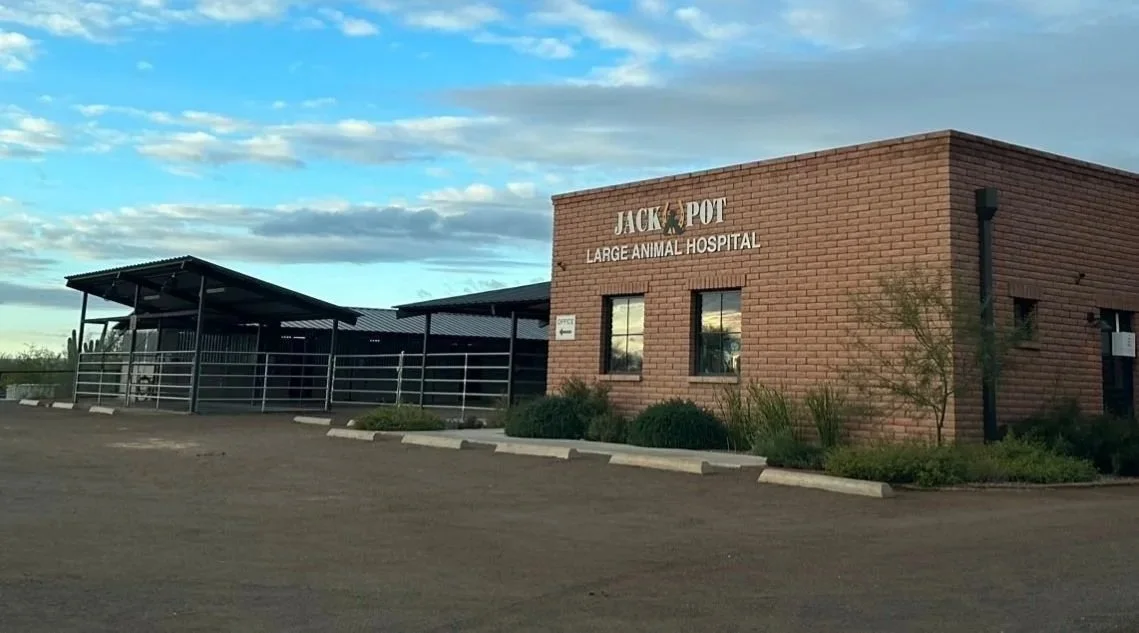
Equine Colic Treatment & Hospitalization in Southern Arizona
Colic is one of the most common equine emergencies. Jackpot Veterinary offers prompt diagnosis, treatment, and hospitalization services to help horses recover safely and comfortably.
Equine Colic Care at
Jackpot Veterinary Center
Horse colic is one of the most common equine emergencies and can become life-threatening without prompt treatment. Learn the signs every horse owner should know, common causes of colic, and what to do if your horse starts showing symptoms.
Horse Colic Treatment and Hospitalization at Jackpot Veterinary
When your horse is experiencing colic, timely veterinary care can make all the difference. At Jackpot Veterinary, we provide comprehensive colic evaluation and treatment services for horses throughout Southern Arizona. Our team is equipped to diagnose and manage a wide range of colic cases, from mild gas colic and impactions to more severe conditions requiring intensive medical care.
Our colic services include:
Comprehensive physical examinations
Pain management and anti-inflammatory therapy
Nasogastric intubation and fluid administration
Intravenous fluid therapy
Bloodwork and diagnostic testing
Ultrasound evaluation
Ongoing monitoring and supportive care
For horses that require more advanced treatment or observation, we offer equine hospitalization services. Hospitalization allows our veterinary team to closely monitor vital signs, hydration status, gastrointestinal function, and response to treatment around the clock. Many horses benefit from continued fluid therapy, pain management, and frequent reassessments that can only be provided in a hospital setting.
In addition to emergency colic care, Jackpot Veterinary offers a full range of equine services, including wellness examinations, preventive care, dentistry, lameness evaluations, reproductive services, vaccination programs, parasite management, emergency medicine, and advanced diagnostics. Our goal is to provide seamless care for your horse, from routine health maintenance to urgent medical emergencies.
If you suspect your horse is showing signs of colic, contact Jackpot Veterinary immediately at 520-999-3887. Early intervention can improve outcomes and help your horse return to health as quickly as possible.
Frequently Asked Questions
-
Horse colic can have many causes, including gas accumulation, intestinal spasms, impactions, sudden diet changes, dehydration, parasites, stress, and intestinal twists or displacements. Some cases develop without an obvious cause.
-
Yes. Because it can be difficult to determine the severity of colic without a veterinary examination, every case should be treated as a potential emergency. Early diagnosis and treatment often improve outcomes.
-
Walking may help prevent injury if a horse is trying to roll violently, but it is not a treatment for colic. Contact your veterinarian first and follow their recommendations. Avoid exhausting your horse through excessive walking.
-
Some mild cases may resolve with medical treatment and monitoring, but others can rapidly worsen. A veterinary evaluation is the safest way to determine the cause and appropriate treatment plan.
-
Call your veterinarian immediately if your horse is showing signs of abdominal pain, repeatedly lying down, rolling, refusing food, sweating excessively, or displaying any unusual behavior that suggests discomfort.
-
Yes. Jackpot Veterinary provides emergency equine care, including colic evaluations, diagnostic testing, fluid therapy, pain management, and hospitalization when needed. Our team is equipped to assess and treat a wide variety of colic cases throughout Southern Arizona.
-
Absolutely. Some horses require intensive monitoring, intravenous fluids, repeated examinations, and ongoing medical management. Our equine hospitalization services allow us to closely monitor your horse's condition and provide continuous care during recovery.
-
While not all cases can be prevented, you can reduce your horse's risk by providing consistent feeding routines, plenty of fresh water, regular dental care, parasite control, gradual feed changes, routine veterinary care, and ample forage in the diet.
-
Remove feed, leave water available, monitor your horse closely, and keep them in a safe area. Do not administer medications unless directed by your veterinarian. Be prepared to describe your horse's symptoms and recent health history when you call.
-
If your horse is showing signs of colic, contact Jackpot Veterinary immediately at 520-999-3887. Prompt veterinary care can be critical to your horse's recovery and overall outcome.