
Diagnostic Imaging
Published July 2026
When your pet or livestock animal isn't feeling well, a physical examination is often the first step toward finding answers. However, many medical conditions occur beneath the surface where they cannot be seen or felt during an exam. That's where veterinary diagnostic imaging becomes an invaluable tool.
At Jackpot Veterinary Center, we offer advanced diagnostic imaging services for both small and large animals, helping veterinarians identify injuries, illnesses, and abnormalities quickly and accurately. With services including digital X-rays and ultrasound, we can gain a clearer picture of your animal's health and create more effective treatment plans.
And exciting news is on the horizon—this fall, we'll be expanding our capabilities with the opening of RadVet Imaging, a dedicated imaging facility designed to provide even more advanced diagnostic services for veterinary patients throughout Southern Arizona.
What Is Veterinary Diagnostic Imaging?
Diagnostic imaging refers to non-invasive technologies that allow veterinarians to view structures inside the body without surgery. These tools provide critical information about bones, organs, soft tissues, and other internal structures that cannot be evaluated through a physical examination alone.
The two most commonly used imaging tools in veterinary medicine are:
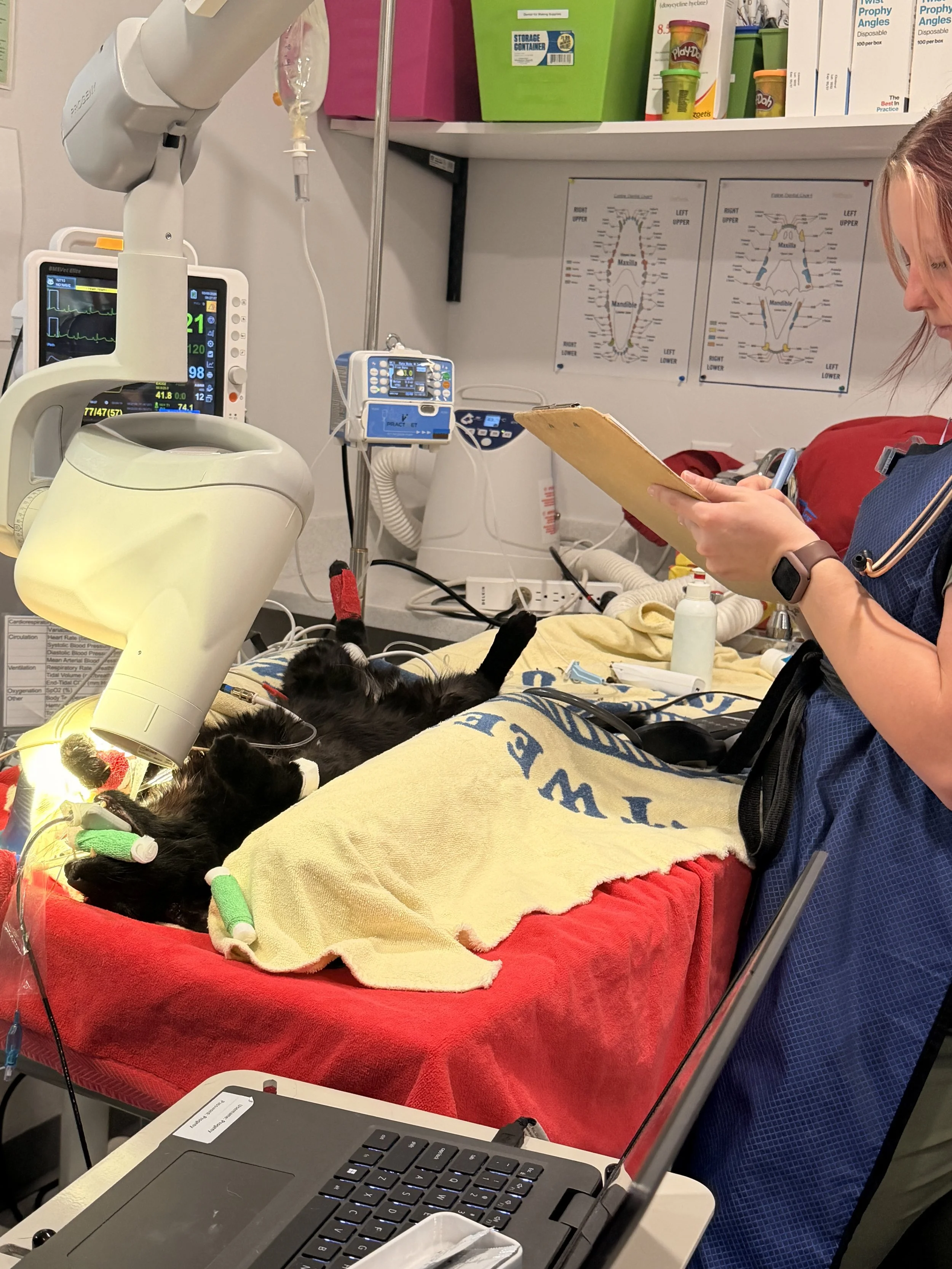
Veterinary technician performing radiographs on a black cat.
Digital X-Rays (Radiography)
X-rays use small amounts of radiation to create images of the body's internal structures. They are particularly useful for evaluating:
Broken bones and fractures
Joint problems and arthritis
Foreign object ingestion
Dental disease
Heart enlargement
Lung conditions
Certain tumors and masses
Digital radiography provides high-quality images that can be reviewed immediately, allowing for faster diagnosis and treatment decisions.
Ultrasound
Ultrasound uses sound waves to create real-time images of internal organs and soft tissues. Unlike X-rays, ultrasound allows veterinarians to observe organs in motion and evaluate blood flow.
Ultrasound is commonly used to assess:
Liver, kidney, and spleen health
Bladder and urinary tract conditions
Gastrointestinal abnormalities
Reproductive health and pregnancy
Heart conditions
Abdominal masses and fluid accumulation
Because ultrasound is non-invasive and does not use radiation, it is considered a safe diagnostic tool for animals of all ages.
How Diagnostic Imaging Helps Pet Owners
One of the most challenging aspects of veterinary medicine is that animals cannot tell us what they're feeling. Diagnostic imaging helps bridge that communication gap by providing valuable information about what's happening inside the body.
Imaging allows veterinarians to:
Reach more accurate diagnoses
Identify problems earlier
Avoid unnecessary procedures
Monitor disease progression
Evaluate treatment effectiveness
Develop targeted treatment plans
For pet owners, this often means faster answers, fewer uncertainties, and greater confidence in their animal's care plan.
What to Expect During the Imaging Process
The imaging process varies depending on the type of study being performed, but in most cases, diagnostic imaging is a straightforward and minimally invasive experience for both pets and their owners. Before the procedure, a veterinarian will perform a physical examination and review your animal's symptoms and medical history to determine which imaging modality will provide the most useful information. Depending on the patient's size, temperament, and condition, special positioning or mild sedation may be recommended to ensure clear, accurate images while keeping the animal comfortable and stress-free. Most imaging procedures can be completed relatively quickly, and the results often provide immediate insights that help guide diagnosis and treatment decisions. Throughout the process, our team prioritizes patient safety, comfort, and clear communication so owners understand what to expect every step of the way.
During X-Rays
Most radiographs can be completed in just a few minutes. Your pet may need to be positioned carefully to obtain the best images. In some cases, mild sedation may be recommended to keep the patient comfortable and still.
During Ultrasound
Ultrasound examinations typically involve clipping a small area of hair and applying ultrasound gel to improve image quality. The procedure is generally painless and often does not require sedation.
After imaging is completed, your veterinarian reviews the findings and discusses the results and treatment recommendations with you.
Computed Tomography (CT)
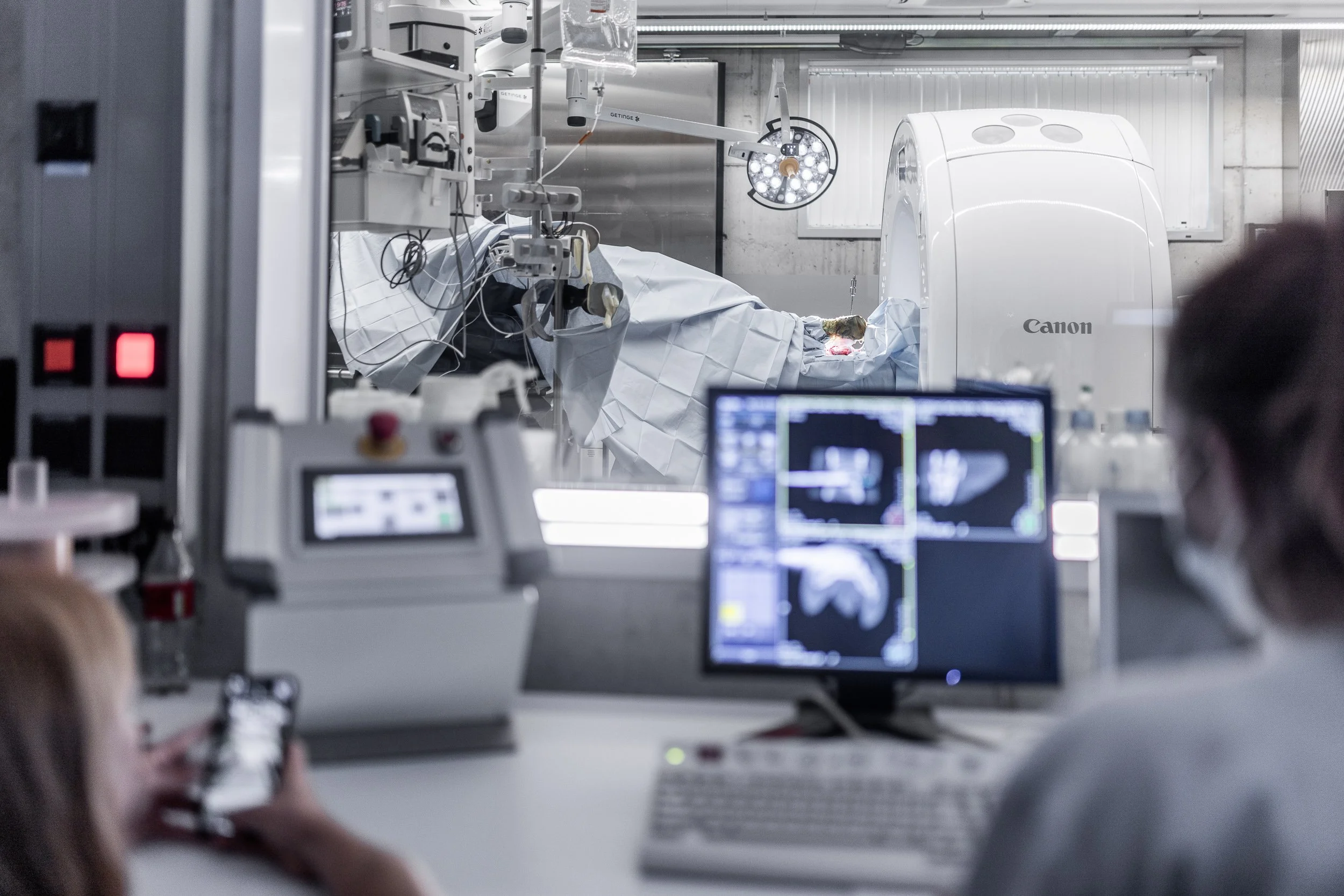
Computed tomography, commonly called a CT scan, combines multiple X-ray images to create highly detailed, three-dimensional views of the body. CT is especially valuable for evaluating areas that can be difficult to assess with traditional X-rays, such as the head, spine, joints, nasal passages, and complex fractures. It also plays an important role in surgical planning and diagnosing certain cancers and internal diseases.
This fall, RadVet Imaging will expand the advanced diagnostic services available on our campus by offering CT imaging for veterinary patients throughout Southern Arizona.
Echocardiogram (Cardiac Ultrasound)
An echocardiogram is a specialized ultrasound that evaluates the structure and function of the heart. Unlike a standard chest X-ray, an echocardiogram allows veterinarians to watch the heart beating in real time, assess blood flow, and evaluate how well the heart's chambers and valves are functioning.
An echocardiogram may be recommended to:
Investigate heart murmurs
Diagnose heart disease
Evaluate enlarged hearts
Monitor known cardiac conditions
Assess heart function before certain procedures
This specialized imaging helps veterinarians diagnose heart conditions early and develop appropriate treatment plans that support your pet's long-term health.
Diagnostic Imaging for Both Small and Large Animals
At Jackpot Veterinary Center, we are proud to provide diagnostic imaging services for a wide variety of patients.
Whether we're evaluating a family dog with a limp, a cat experiencing gastrointestinal issues, or a horse requiring reproductive or musculoskeletal evaluation, our diagnostic tools help us deliver accurate and efficient care.
RadVet’s imaging services support:
Dogs
Cats
Horses
Rabbits
Lizards
Livestock
Other animal patients
This comprehensive approach allows us to serve the diverse needs of our Southern Arizona community.
Looking Ahead: Introducing RadVet Imaging
We're excited to announce that this fall, Jackpot Veterinary Center will expand its diagnostic capabilities with the opening of RadVet Imaging, a dedicated imaging facility located adjacent to our clinic.
RadVet Imaging will provide advanced veterinary imaging services and enhanced diagnostic support for veterinarians and pet owners throughout the region. This expansion reflects our ongoing commitment to delivering high-quality veterinary care and investing in technologies that improve patient outcomes.
As construction progresses, we'll continue sharing updates about new services, equipment, and opportunities available through RadVet Imaging.
Schedule Diagnostic Imaging at Jackpot Veterinary Center
If your pet or livestock animal requires diagnostic testing, our team is here to help. Early diagnosis often leads to more effective treatment and better outcomes, making diagnostic imaging one of the most valuable tools in modern veterinary medicine.
To learn more about our diagnostic imaging services or to schedule an appointment, contact Jackpot Veterinary Center at 520-999-3888.
Our team is committed to helping you find answers and providing the highest level of care for every animal we serve.