
Pigeon Fever Cases Continue Across Tucson: What Horse Owners Need to Know
Pigeon Fever continues to be diagnosed throughout the Tucson area, and veterinarians are still actively managing cases.
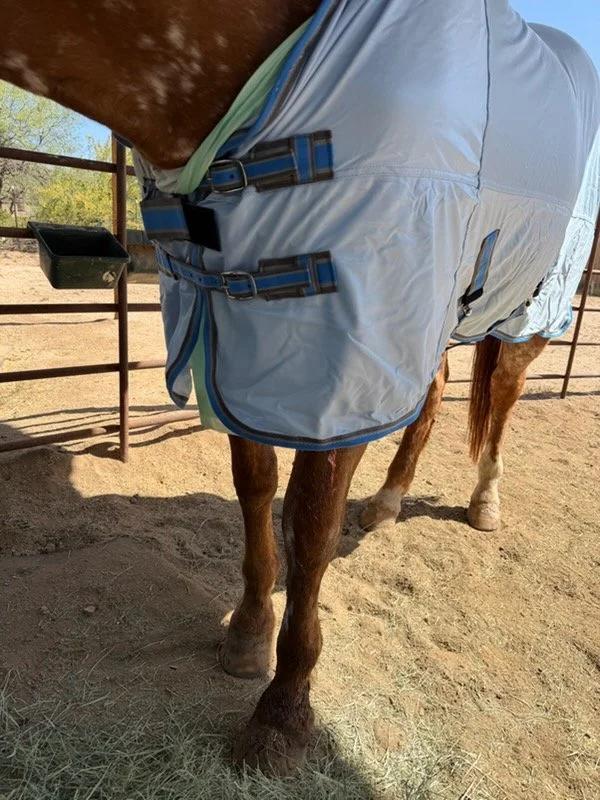
As summer approaches, we continue to receive calls from horse owners concerned about new swellings, abscesses, fevers, and drainage wounds. While many horse owners have heard of Pigeon Fever, it's important to remember that the disease remains active in Southern Arizona and can affect horses of any age or breed.
What Is Pigeon Fever?
Pigeon Fever is caused by the bacterium Corynebacterium pseudotuberculosis. The disease gets its name from the characteristic swelling that often develops in the chest area, creating a "pigeon-breasted" appearance. The bacteria typically enter the body through small wounds or abrasions and are commonly spread by flies and contaminated environments.
What Does Pigeon Fever Look Like?
The most common form of the disease causes abscesses beneath the skin. These abscesses often develop on:
The chest (pectoral region)
Along the belly
Near the sheath or mammary gland
Occasionally on the limbs or other parts of the body
Many horses initially develop vague signs such as:
Fever
Lethargy
Decreased appetite
Mild swelling before an abscess becomes obvious
As the infection progresses, the swelling often becomes larger, firmer, and eventually ruptures and drains thick tan-colored pus.
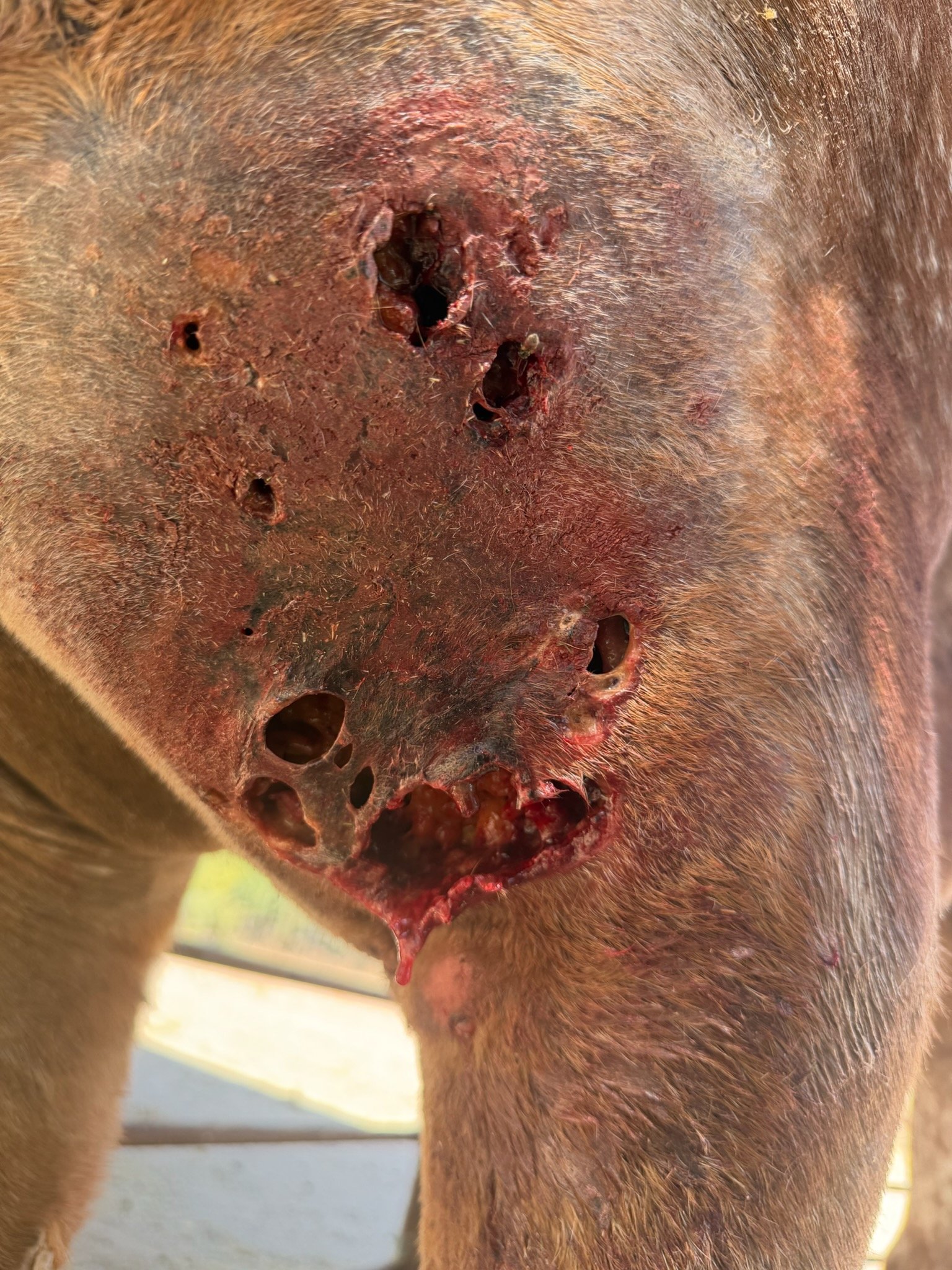
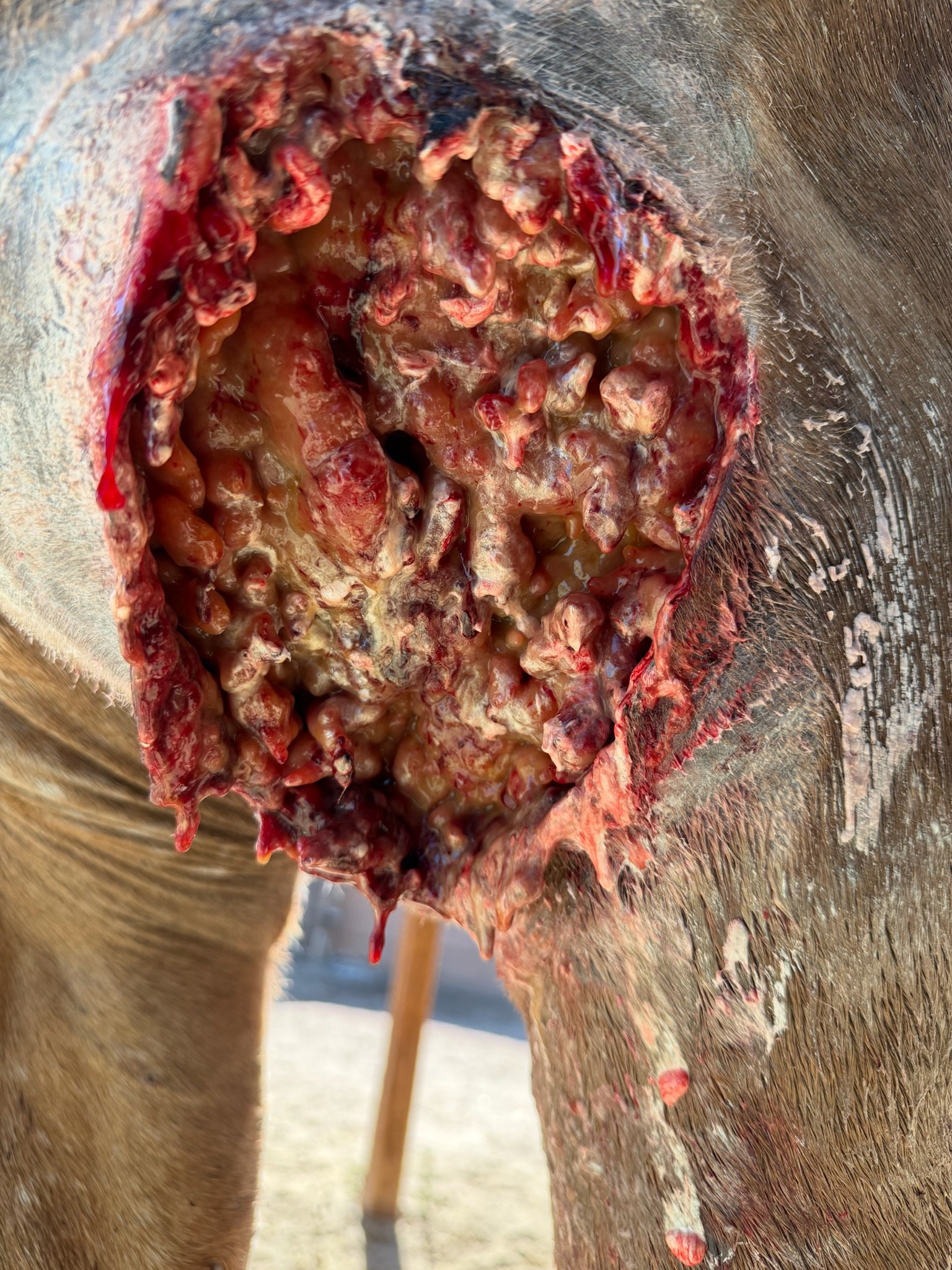
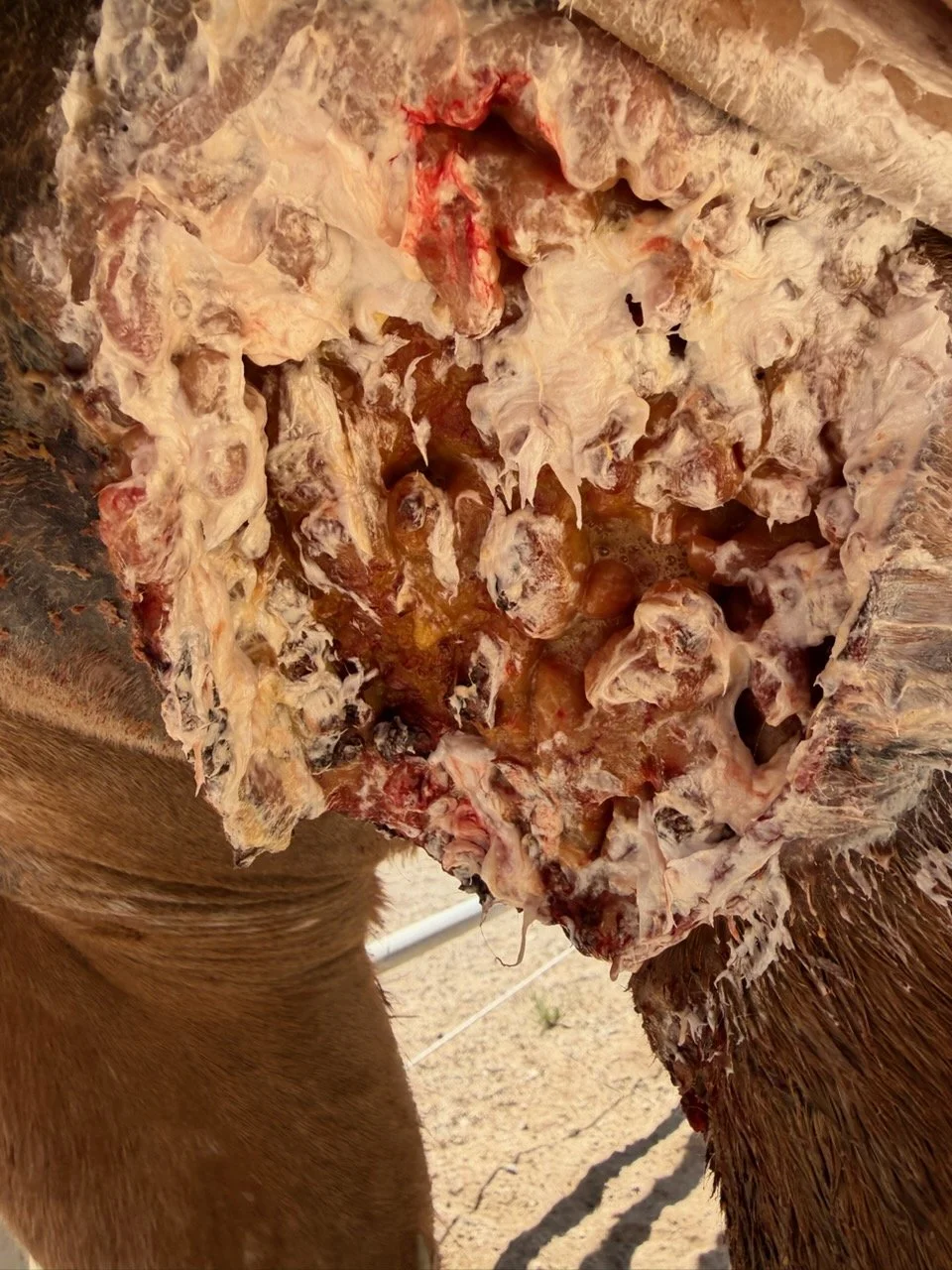
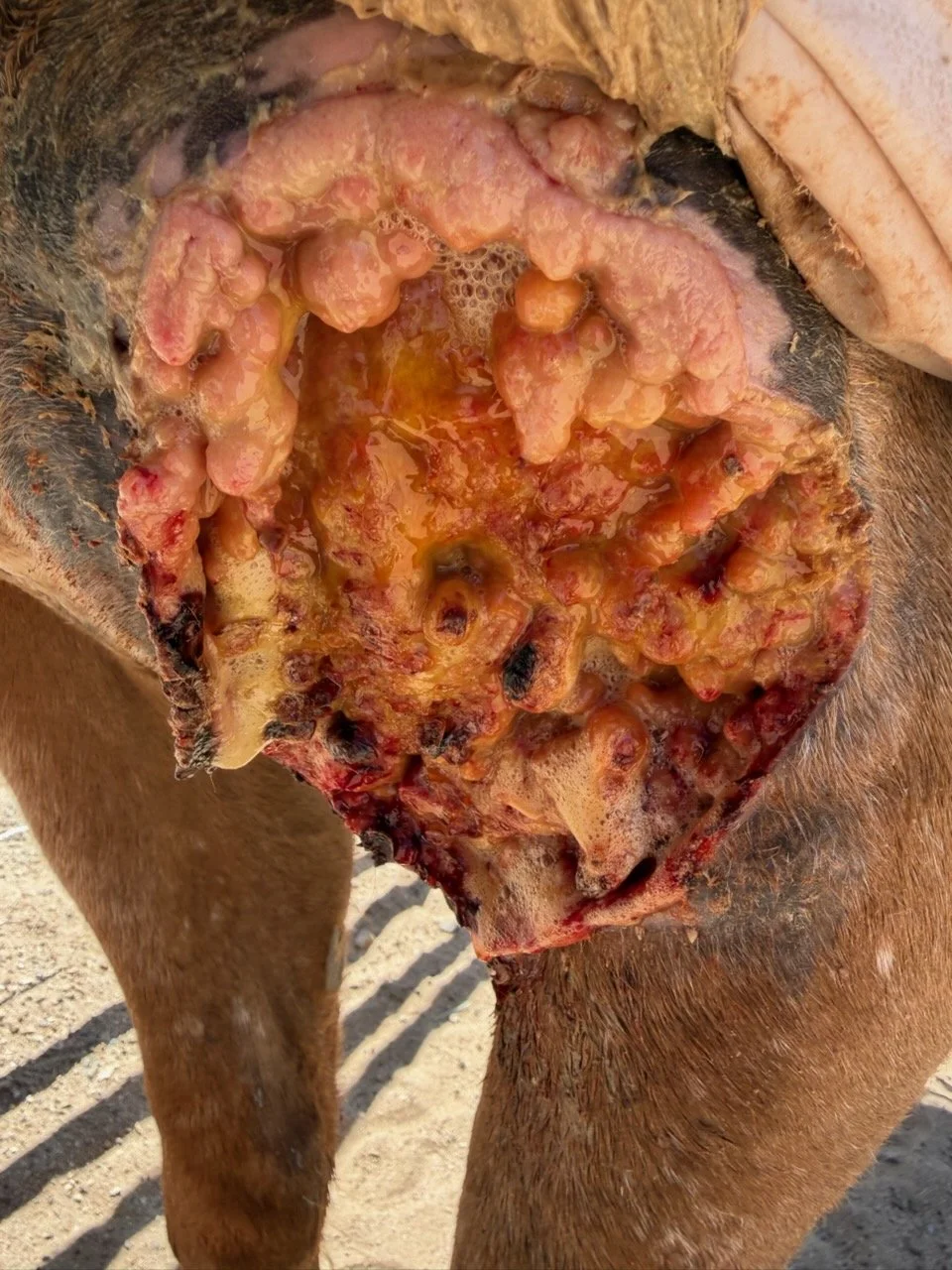
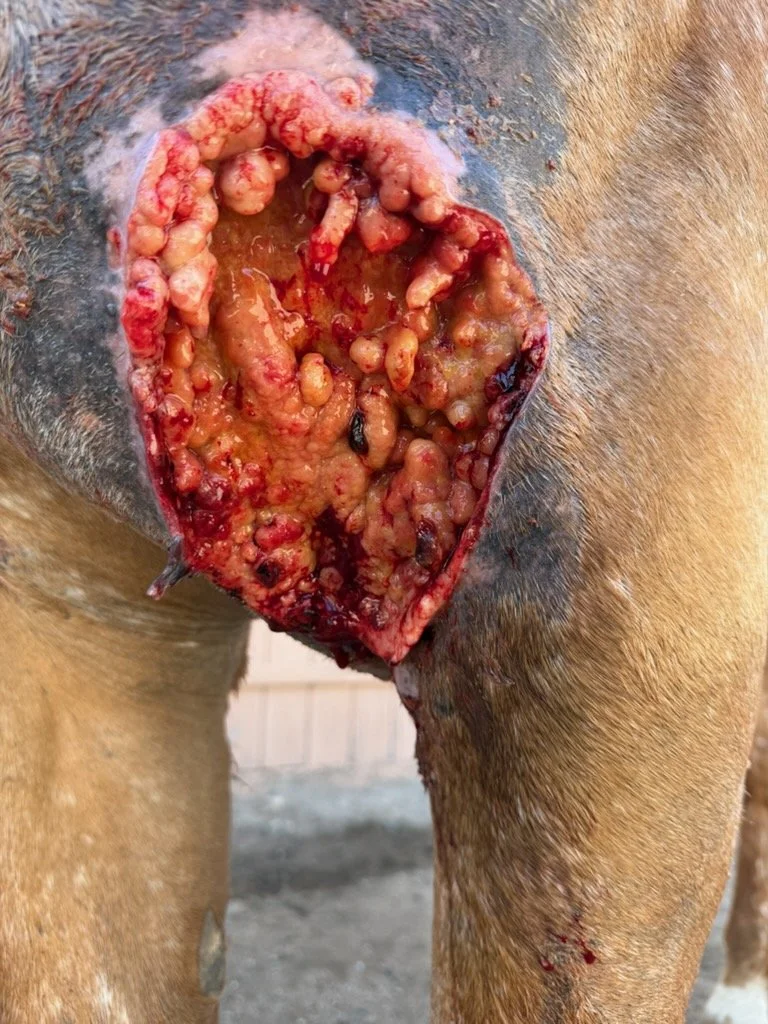
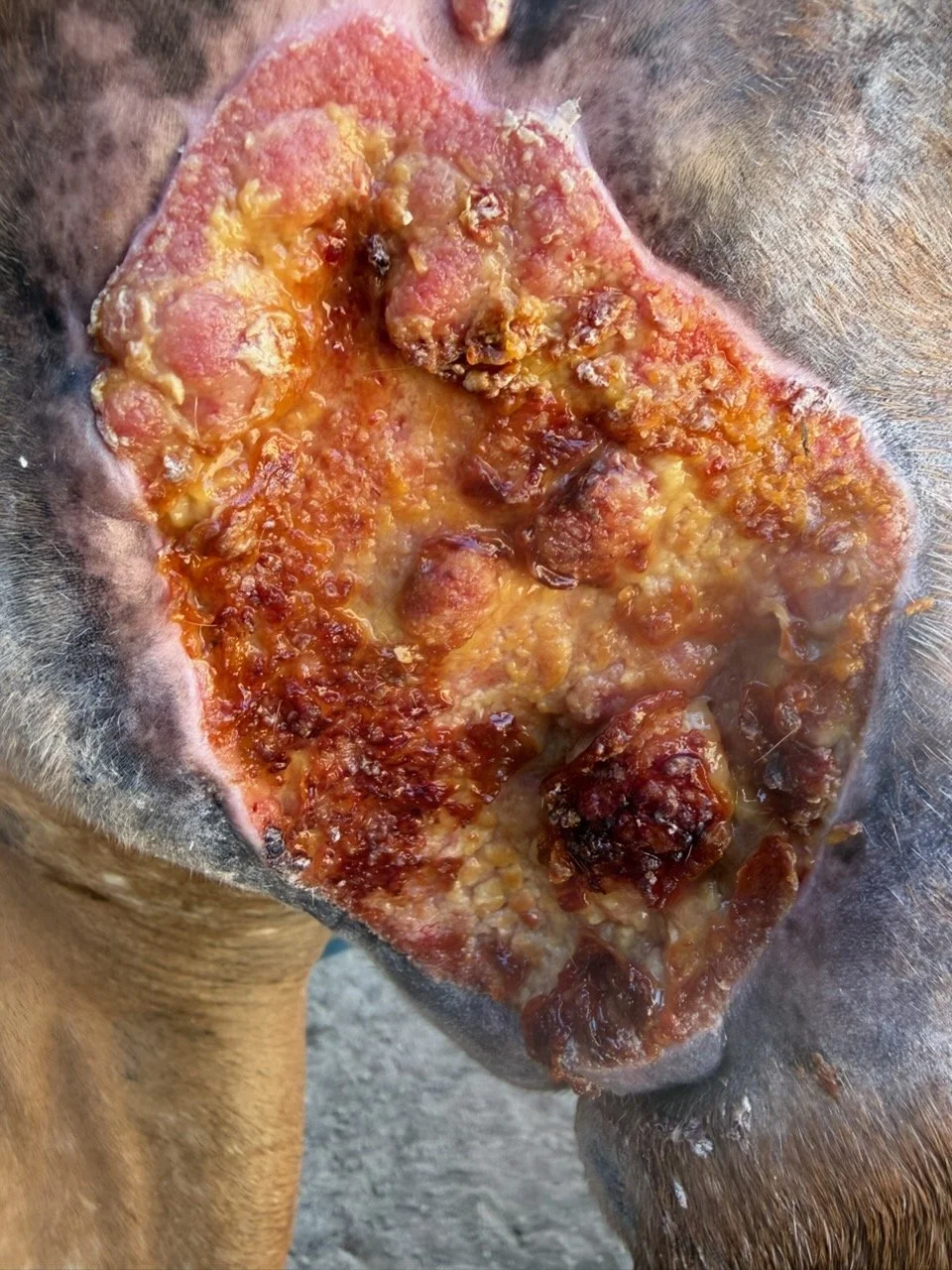
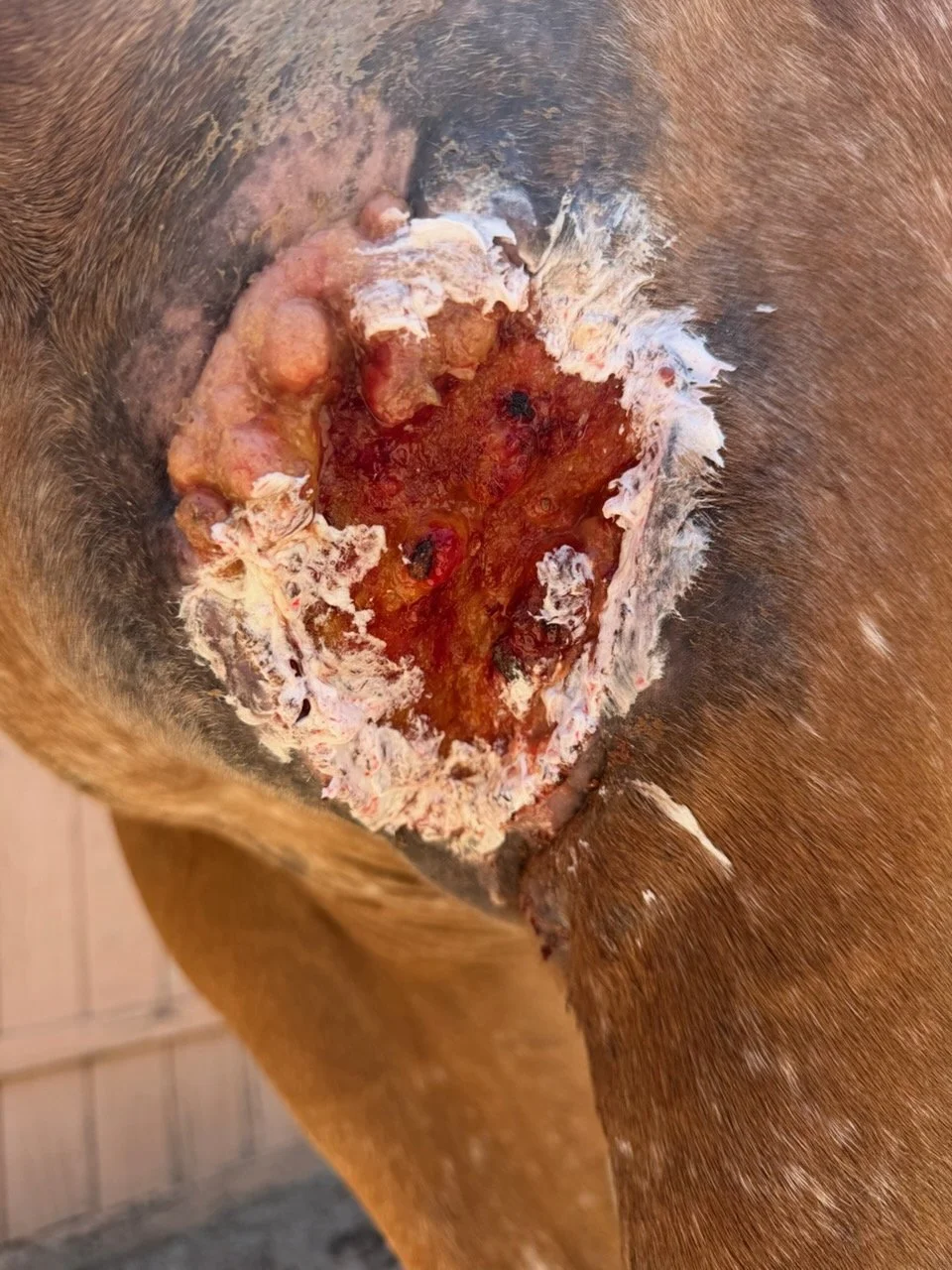
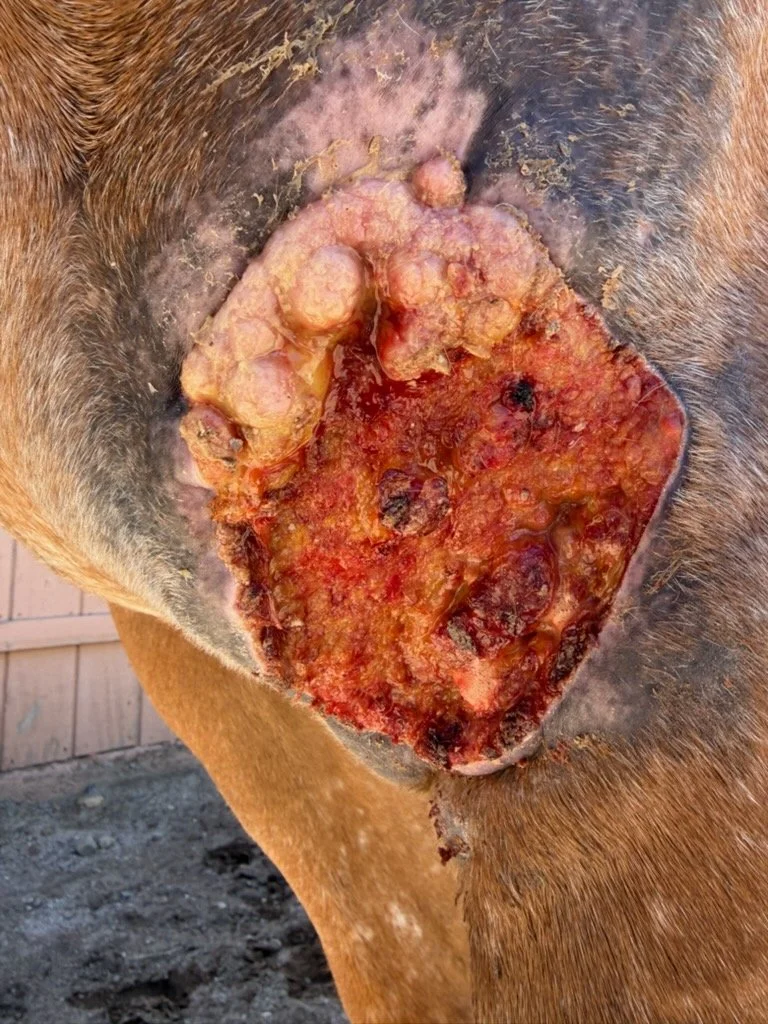
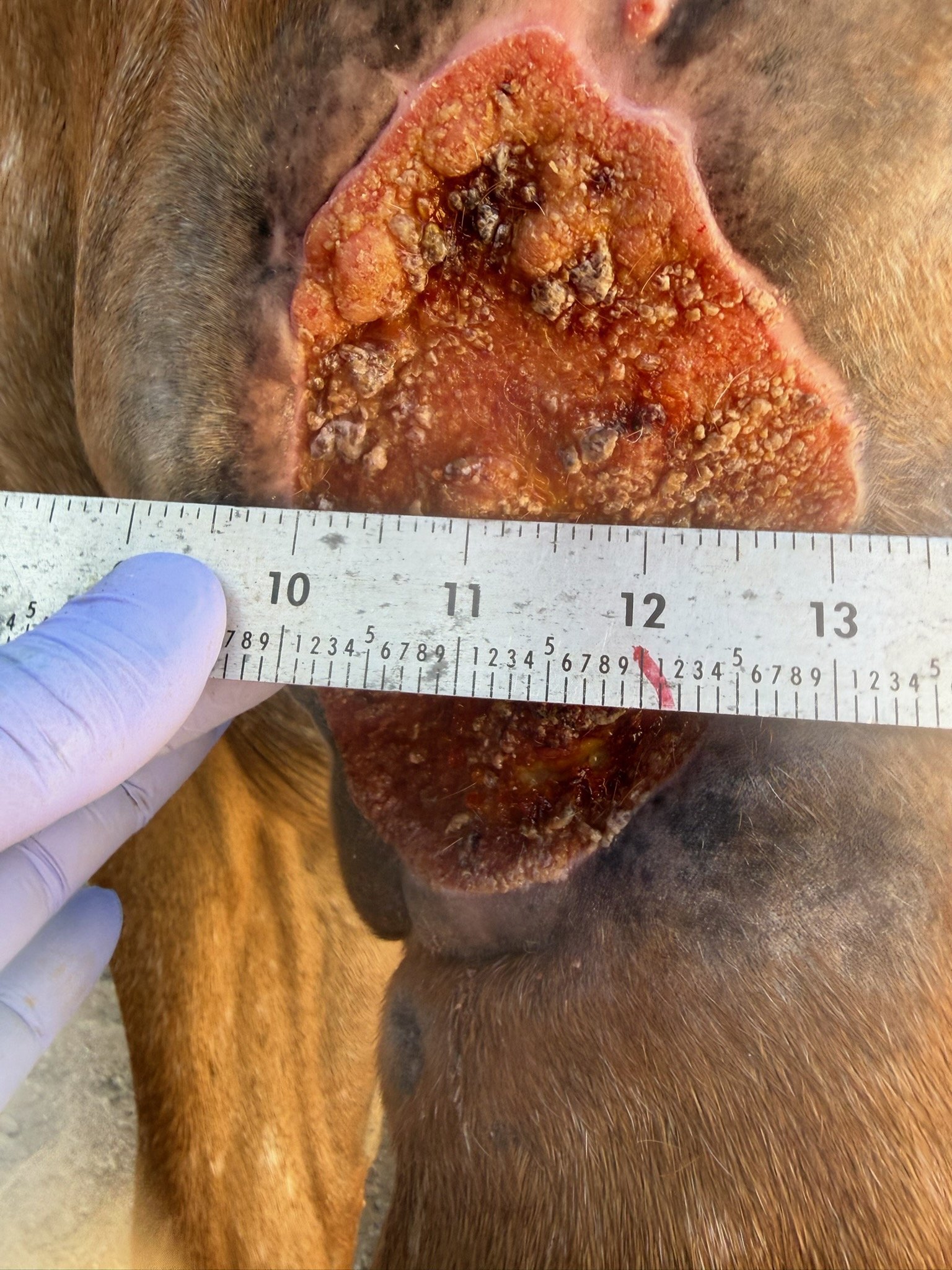
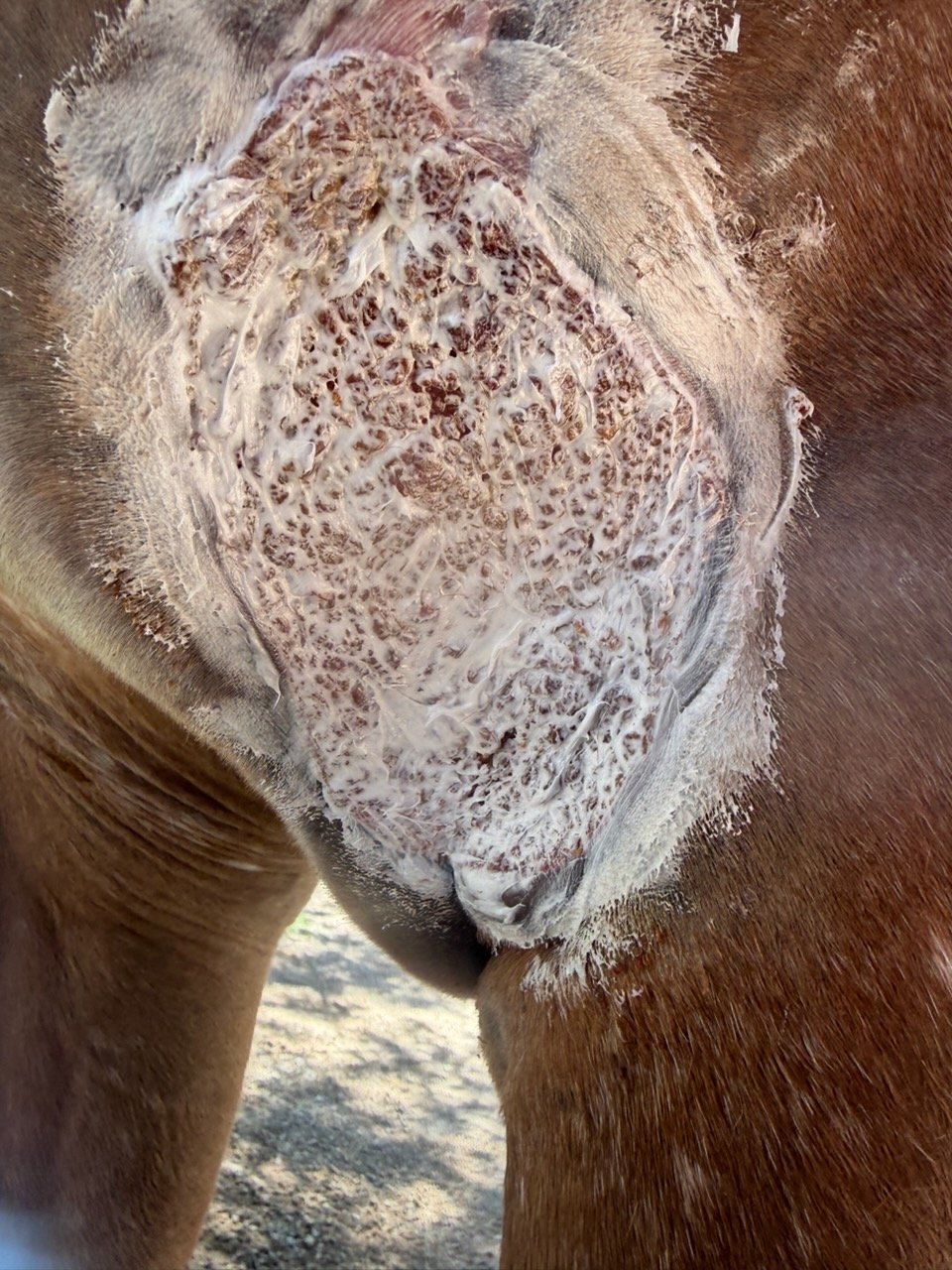
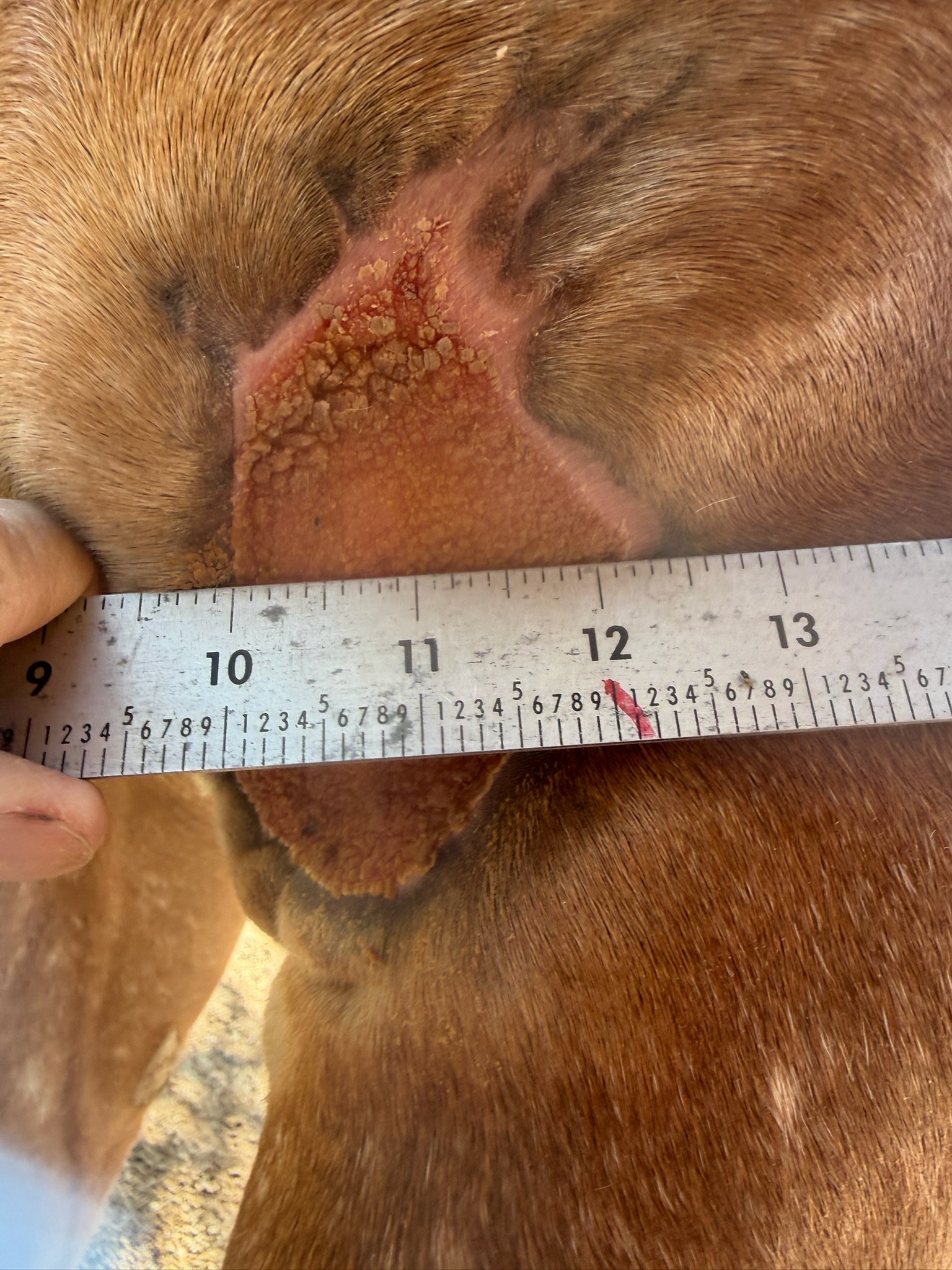
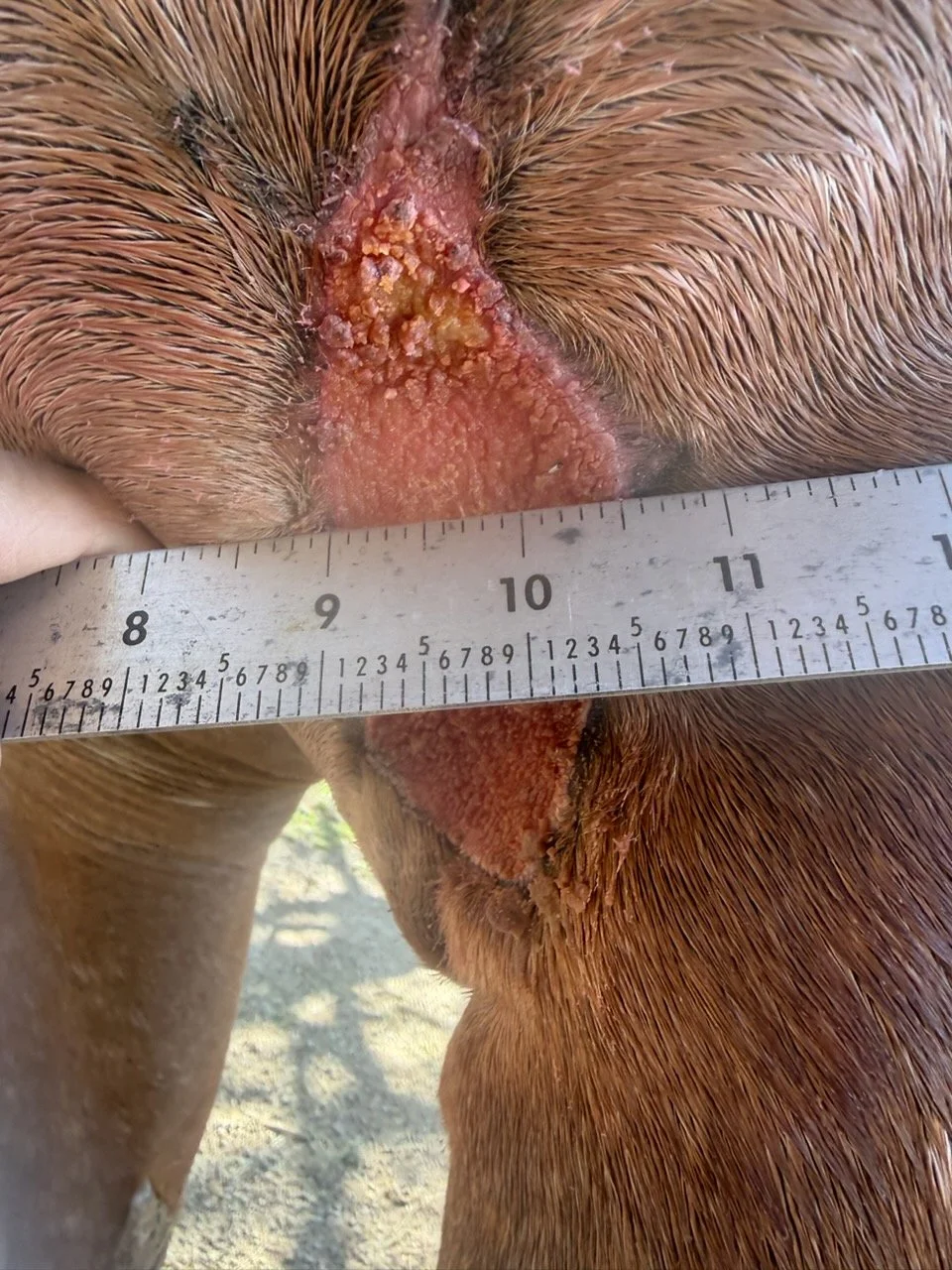
Photos are the property of Jackpot Veterinary Center. Photos may not be reused or redistributed for any reason.
Pictured Above: The horse pictured above developed a classic pectoral abscess associated with Pigeon Fever. While these swellings can look alarming, early veterinary evaluation helps determine the best treatment plan and whether additional diagnostics are needed.
Why Early Diagnosis Matters
While many horses experience only external abscesses, Pigeon Fever can occasionally cause more serious internal infections involving organs such as the liver, spleen, kidneys, or lungs. Internal infections are less common but can be significantly more serious.
Contact your veterinarian if your horse develops:
Unexplained fever
Swelling on the chest, belly, or limbs
Draining abscesses
Weight loss
Persistent lethargy
Can It Spread to Other Horses?
Yes. The bacteria can contaminate the environment when abscesses drain. Flies, contaminated equipment, and contact with infected drainage can all contribute to spread. Good fly control, prompt wound care, and isolation of affected horses can help reduce transmission risk.
What Should You Do If You Suspect Pigeon Fever?
If you notice swelling or an abscess on your horse:
Contact your veterinarian before attempting to lance or drain it.
Limit contact with other horses when possible.
Practice good hygiene when handling drainage.
Implement aggressive fly control measures.
Monitor your horse's temperature and overall attitude.
Early evaluation can help determine whether testing, ultrasound, drainage management, or additional treatment is needed.
We Are Still Seeing Cases in Tucson
Pigeon Fever remains a common concern for horses throughout Southern Arizona. If your horse develops a suspicious swelling, fever, or abscess, don't wait to have it evaluated.
For a more detailed overview of the disease, read our original article: Pigeon Fever in Tucson Horses.
If you have concerns about your horse, contact Jackpot Veterinary Center at 520-999-3888 to schedule an examination.