
Trick or Treatment? Halloween Hazards Every Pet Owner Should Know
Published October 2026
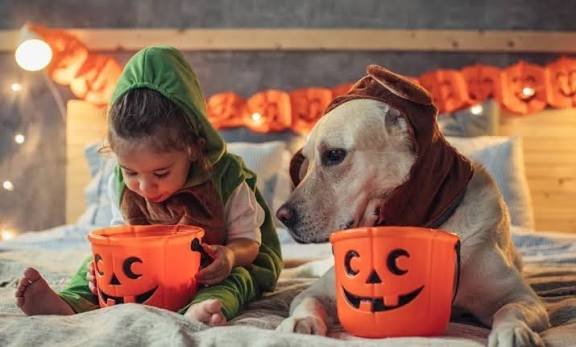
Halloween is full of fun, costumes, decorations, and plenty of sweet treats. But for our four-legged family members, some of these holiday favorites can pose serious health risks.
Between bowls of candy, trick-or-treat bags, and festive decorations, there are more opportunities than usual for curious dogs and cats to get into something they shouldn't.
At Jackpot Veterinary Center, we want Tucson pet owners to enjoy the holiday while keeping their pets safe. Here's what you should know about common Halloween hazards, what symptoms to watch for, and when to contact your veterinarian.
1. Chocolate: A Sweet Treat With Serious Risks
Chocolate is one of the most common causes of pet poisoning during the holidays. While it may be delicious to us, it contains two compounds, theobromine and caffeine, that can be toxic to dogs and cats.
Not all chocolate carries the same level of risk. Dark chocolate, baking chocolate, and cocoa powder contain higher concentrations of these compounds and are generally more dangerous than milk chocolate.
The severity of chocolate poisoning depends on several factors, including your pet's weight, the type of chocolate, and how much was consumed.
Signs of chocolate poisoning may include:
Vomiting or diarrhea
Increased thirst or urination
Restlessness or hyperactivity
Rapid heart rate
Muscle tremors or seizures
Symptoms may not appear immediately, so don't assume your pet is safe simply because they're acting normally.
If your pet eats chocolate, contact your veterinarian or a pet poison control service immediately. Don't wait for symptoms to develop.
2. Candy Isn't Always Pet Friendly
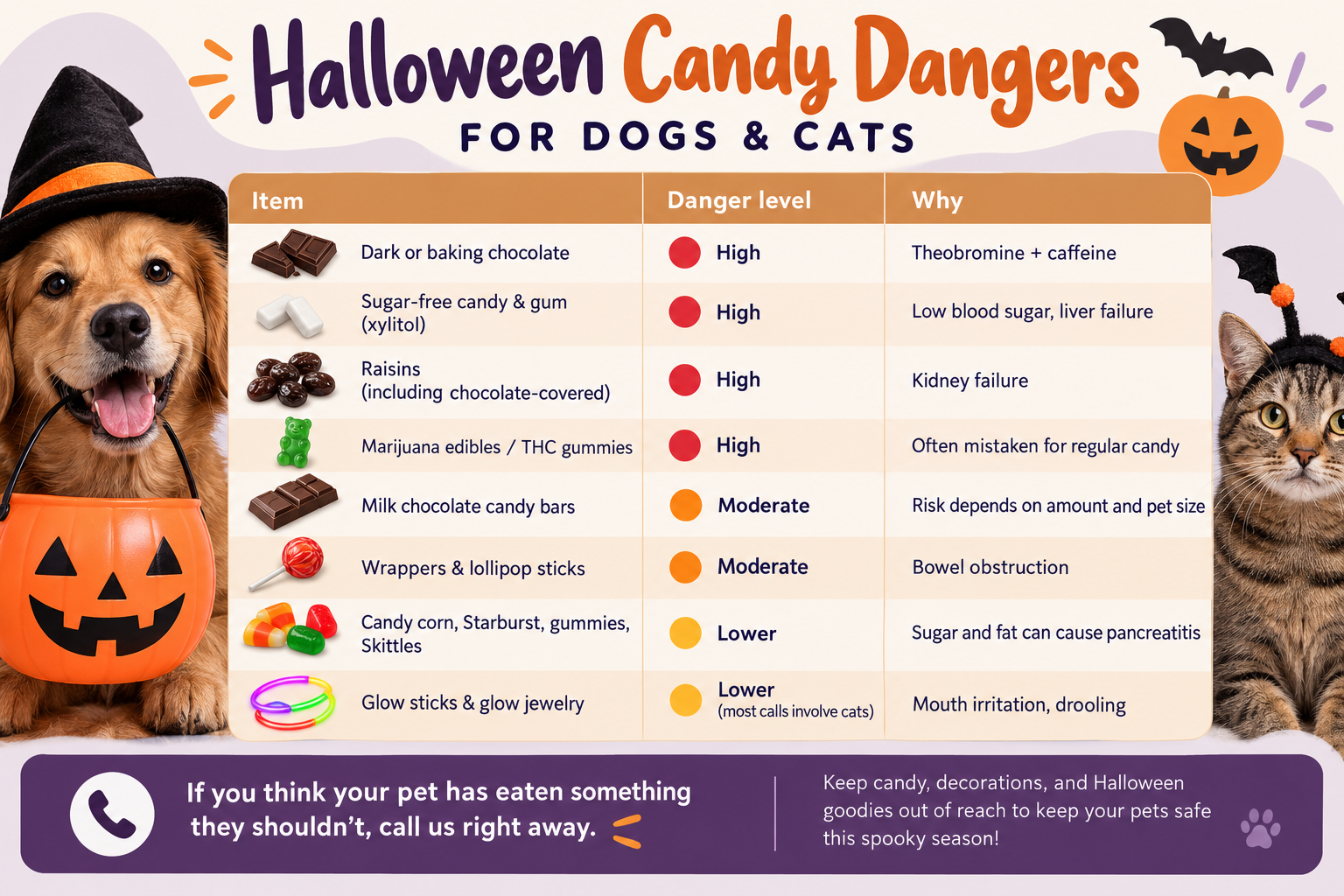
Chocolate isn't the only Halloween candy that can cause problems.
Sugar-free candy and gum: Some contain xylitol, a sugar substitute that is extremely toxic to dogs. Xylitol can cause a rapid drop in blood sugar and, in severe cases, liver failure. It may also appear on ingredient labels as birch sugar.
Raisins and chocolate-covered raisins: Grapes and raisins can cause acute kidney injury in dogs. Even small amounts may be dangerous.
Gummy candies, candy corn, and other sugary treats: While some candies don't contain ingredients that are directly toxic, large amounts of sugar and fat can cause gastrointestinal upset and may contribute to pancreatitis, a painful inflammation of the pancreas.
Candy wrappers and lollipop sticks: Sometimes the packaging is just as concerning as the candy itself! Wrappers, plastic, foil, and sticks can create choking hazards or intestinal blockages if swallowed.
The safest approach is to skip sharing Halloween candy with your pets altogether. Instead, offer a treat specifically made for dogs or cats.
3. Decorations Can Be Dangerous, Too!
Halloween decorations help set the spooky mood, but they can also attract curious pets.
A few things to keep an eye on include:
Glow sticks and glow jewelry: Particularly tempting to cats, these products can cause significant mouth irritation, drooling, and discomfort if chewed.
Fake spiderwebs, string, and ribbons: These can become tangled around pets or cause dangerous intestinal blockages if swallowed.
Candles and jack-o'-lanterns: Open flames create burn and fire hazards, especially around wagging tails and curious noses.
Electrical cords and battery-operated decorations: Chewing on cords can cause electrical injuries, while swallowed batteries can cause serious internal damage.
Small decorative pieces: Plastic spiders, fake eyeballs, and other small accessories may pose choking or obstruction risks.
Consider placing decorations out of reach and using flameless candles whenever possible.
4. Don't Forget About Costumes and Trick-or-Treaters
Not every Halloween danger involves something your pet might eat.
Frequent doorbell ringing, unfamiliar visitors, and people wearing costumes can be overwhelming for some animals. Even normally friendly pets may become anxious or frightened.
If your pet tends to be nervous around visitors, consider setting up a quiet, comfortable space away from the front door.
If you're planning to dress up your pet, make sure their costume fits comfortably, doesn't restrict movement or breathing, and doesn't contain small pieces they could chew off.
And remember, not every pet enjoys wearing a costume! Sometimes a festive collar or bandana is the better option.
Halloween safety tip: With doors opening frequently for trick-or-treaters, make sure your pet's microchip information and identification tags are up to date in case they slip outside.
If you think your pet may need support with anti-anxiety medication, don’t wait! Contact us as soon as possible.
5. What Should You Do if Your Pet Eats Something Dangerous?
Accidents happen, even when we're careful. Knowing how to respond can make a big difference.
If you suspect your pet has eaten something potentially toxic:
Remove access to the item. Keep your pet from eating any more of it.
Identify what they ate. Save any packaging or ingredient information.
Estimate how much was consumed and when. This information can help your veterinarian assess the risk.
Contact your veterinarian or a pet poison control service immediately. Some toxins can cause serious harm before visible symptoms develop.
Do not induce vomiting unless directed by a veterinary professional. Doing so can make certain situations worse.
If your pet is experiencing seizures, difficulty breathing, collapse, or other severe symptoms, seek emergency veterinary care immediately.
You can also contact:
VEG ER for Pets (Tucson): 520-476-3410 (24/7)
Pet Poison Helpline: 855-764-7661 (24/7)
ASPCA Animal Poison Control Center: 888-426-4435 (24/7)
Consultation fees may apply.
A Little Prevention Goes a Long Way!
Halloween should be a fun time for the whole family, including our pets!
Keeping candy in secure containers, checking decorations for potential hazards, and giving nervous pets a quiet place to relax can help prevent an unexpected veterinary emergency.
As we head into the holiday season, take a few extra minutes to pet-proof your home and remind family members that human treats aren't always safe for animals.
If you're concerned that your dog or cat has gotten into something they shouldn't, don't hesitate to reach out to a veterinary professional.
From all of us at Jackpot Veterinary Center, we wish you and your pets a safe and happy Halloween!