How to Tell if Your Dog or Cat Is in Pain: Signs Pet Owners Should Know
Written by Dr. Autum Busarow-Kosco, DVM
Published October 2026
Pain in cats and dogs
Is your dog slowing down on walks? Has your cat stopped jumping onto their favorite spot? These small changes could be signs that your pet is experiencing pain.
As veterinarians, one of the most important things we want pet owners to understand is that animals don't always show pain in obvious ways.
Unlike people, dogs and cats cannot tell us when something hurts. Instead, they communicate discomfort through changes in their behavior, movement, appetite, and daily routines. Sometimes these changes are so subtle that they are easy to overlook.
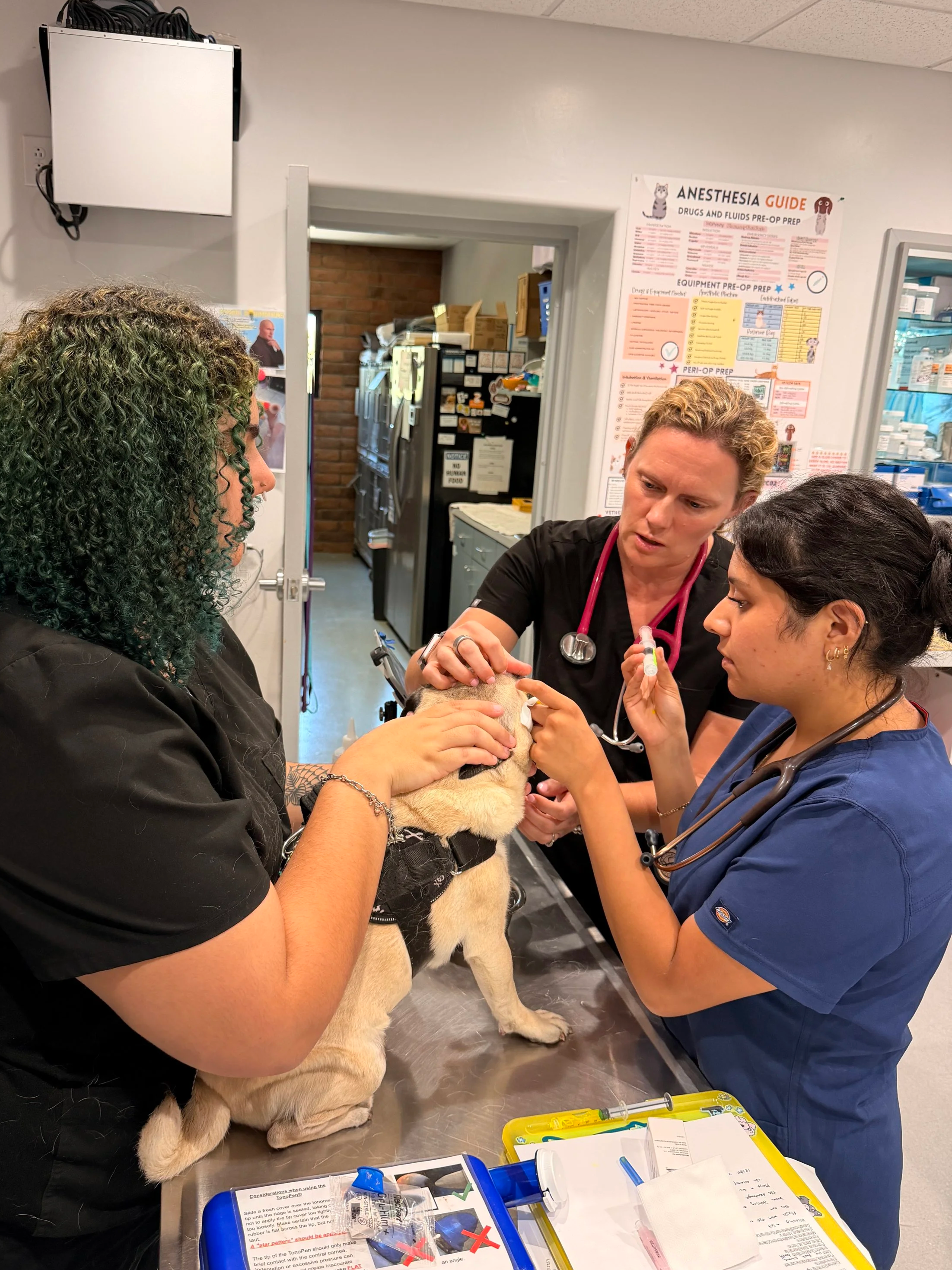
Dr. Autum and two veterinary technicians performing an eye stain test on a brown dog.
Learning how to recognize the signs of pain in dogs and cats can help you identify potential health problems earlier and get your pet the care they need to stay comfortable.
Why Do Dogs and Cats Hide Pain?
You might expect a pet in pain to cry, limp, or react when touched, but that isn't always the case.
Animals may instinctively hide signs of pain or weakness. In the wild, showing vulnerability can make an animal more susceptible to predators. Even our domesticated pets may retain some of these instincts.
Some dogs are also eager to maintain their usual routines and interactions with their families, even when they are uncomfortable.
Cats, in particular, can be especially skilled at concealing pain. A cat experiencing discomfort may simply become quieter, spend more time hiding, or stop participating in activities they once enjoyed.
A pet can still eat, play, and greet you at the door while experiencing pain.
This is why knowing your pet's normal behavior is so important. A seemingly minor change in their daily routine may be an early indicator of an underlying medical condition.
8 Common Signs of Pain in Dogs and Cats
Pain can look different from one pet to another. Some animals display noticeable physical symptoms, while others communicate their discomfort through changes in behavior.
Here are eight signs pet owners should watch for.
1. Changes in Movement or Mobility
One of the most recognizable signs of pain is a change in how your pet moves.
You may notice:
Limping or favoring one leg
Stiffness, especially after resting
Difficulty standing up, particularly on slippery floors like tile
Reluctance to climb stairs
Hesitation when jumping onto furniture or into the car
Moving more slowly than usual
These changes may indicate joint pain, arthritis, injury, or another condition affecting your pet's mobility.
2. Changes in Behavior or Personality
Sometimes pain shows up as a change in your pet's personality rather than a physical symptom.
A normally social dog may become withdrawn, while an affectionate cat may suddenly prefer to be left alone.
Watch for increased hiding, restlessness, irritability, or a loss of interest in playing and interacting with family members.
If your pet suddenly seems unlike themselves, discomfort could be one possible explanation.
3. Changes in Appetite or Eating Habits
A pet experiencing pain may eat less, refuse favorite treats, or show less enthusiasm at mealtime.
Difficulty chewing, dropping food, or favoring one side of the mouth may indicate dental discomfort.
Changes in appetite can have many causes, but they should never be ignored, particularly when accompanied by other symptoms.
4. Unusual Vocalization
While many pets remain quiet when they are uncomfortable, others may become more vocal.
Signs can include:
Whining or whimpering
Yelping when moving or being touched
Growling unexpectedly
Increased meowing or unusual vocalizations
Keep in mind that the absence of crying does not mean your pet is pain-free.
5. Changes in Posture or Body Position
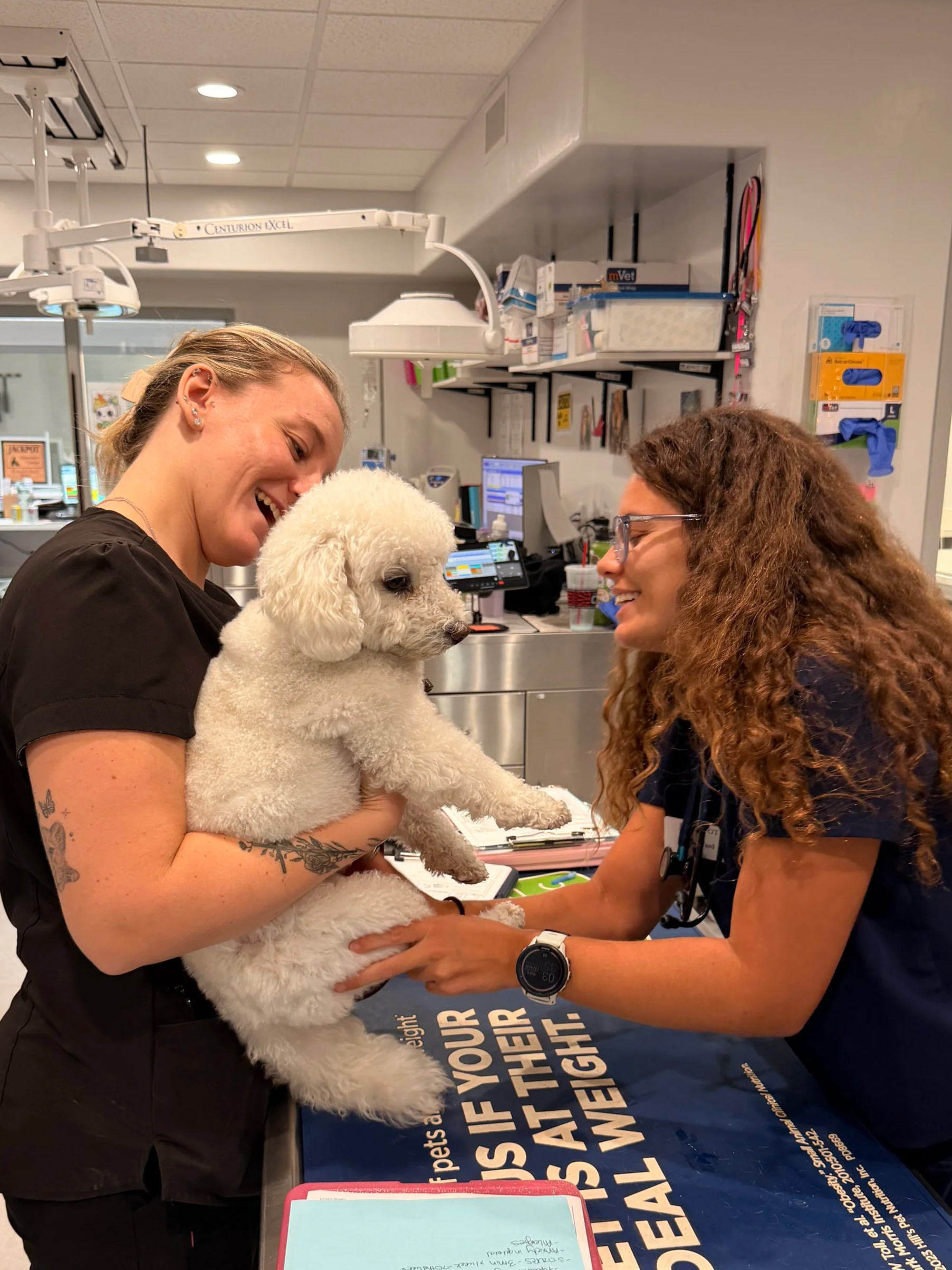
Dr. Ward and a veterinary technician examining a white dog.
Pay attention to how your pet stands, sits, and rests.
An animal experiencing pain may hunch their back, hold their head lower than usual, flatten their ears, or repeatedly shift positions while trying to get comfortable.
Some pets may avoid lying on a particular side or seem unable to settle into their normal resting position.
6. Excessive Licking or Chewing
Repeated licking or chewing at a particular area of the body may indicate discomfort.
For example, a dog may frequently lick a painful joint or paw. This behavior can also be associated with skin irritation, allergies, or other medical conditions.
If your pet is consistently focusing on one area, it is worth having your veterinarian investigate.
7. Changes in Daily Habits
Sometimes the earliest signs of pain are changes in everyday activities.
Your pet may:
Sleep more than usual
Show less interest in walks or playtime
Pant while resting
Have accidents indoors
Avoid grooming or groom less effectively
Stop jumping onto favorite furniture
Become reluctant to participate in familiar activities
These changes are particularly important to recognize in older pets, where discomfort may mistakenly be attributed to aging.
8. Increased Sensitivity or Irritability
A pet who normally enjoys being held, brushed, or petted may suddenly resist physical contact.
Dogs may growl or pull away, while cats may hiss, swat, or avoid being handled.
Remember that an animal in pain may react defensively, even if they have never shown aggression before.
What Causes Pain in Dogs and Cats?
Pain can develop suddenly following an injury or gradually as a medical condition progresses.
Some common causes of pain in pets include:
Arthritis and joint disease
Muscle and soft tissue injuries
Dental disease and oral infections
Ear infections
Skin irritation or inflammation
Abdominal discomfort
Urinary tract problems
Chronic illnesses and underlying medical conditions
Although senior dogs and cats are more likely to experience certain conditions, such as arthritis, pain should not be considered a normal or unavoidable part of aging.
If your older dog is struggling to get up or your senior cat has stopped jumping, don't automatically assume they are just getting older. These changes may indicate a treatable or manageable condition.
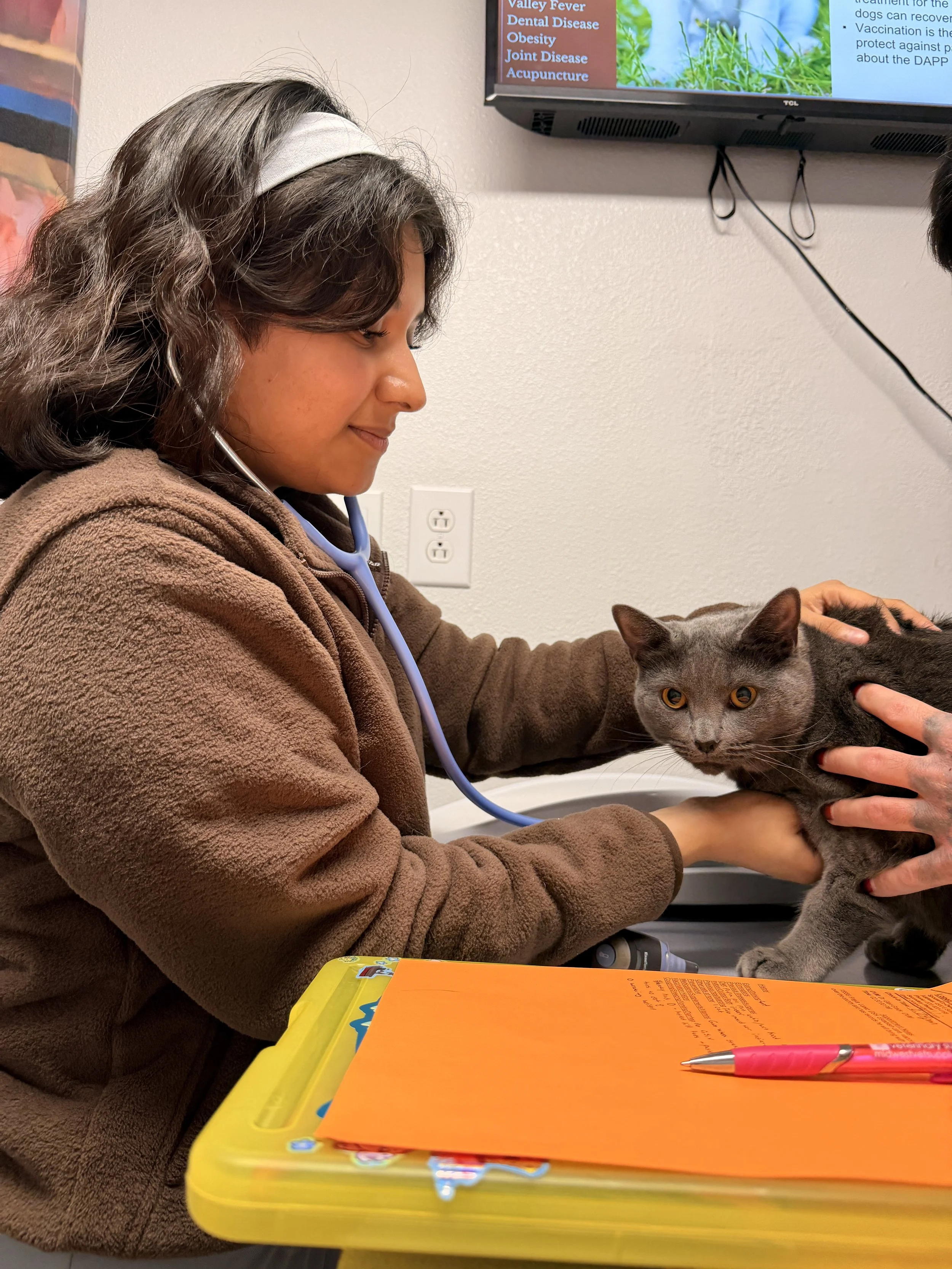
A veterinary technician listening to a grey cat’s heart beat.
When Should You Take Your Pet to the Veterinarian for Pain?
If you notice a new or persistent change in your pet's behavior, movement, appetite, or daily routine, contact your veterinarian.
Even subtle symptoms can provide important clues about your pet's health.
Certain symptoms require more immediate attention. Seek urgent veterinary care if your pet experiences severe or sudden pain, difficulty breathing, collapse, inability to stand, a swollen or painful abdomen, or difficulty urinating.
Never give your pet human pain medications unless specifically instructed by your veterinarian.
Common medications such as ibuprofen and naproxen can be toxic to dogs and cats. Acetaminophen is particularly dangerous to cats.
Pain management should always be guided by a veterinarian who can determine which treatments are safe and appropriate for your pet.
How to Help Your Veterinarian Identify Your Pet's Pain
You know your pet's habits, personality, and routines better than anyone. Your observations can be incredibly valuable when determining what may be causing discomfort.
Before your veterinary appointment, try to make note of:
When you first noticed the changes
Whether the symptoms are improving or getting worse
Which movements or activities seem difficult
Any changes in appetite, sleep, or behavior
Whether the discomfort appears to occur at certain times of day
One of the most helpful things you can do is take a short video of the behavior you're concerned about.
A dog who limps at home may walk normally during an examination. A cat who struggles to jump onto furniture may not demonstrate that behavior at the clinic.
Videos of unusual movement, posture, or difficulty standing can help your veterinarian better understand what you are seeing.
Avoid repeatedly pressing on a painful area or forcing your pet to move to demonstrate a problem. Animals experiencing discomfort may react defensively.
During your appointment, your veterinarian can perform a physical examination, recommend diagnostic testing when appropriate, and develop an individualized treatment plan based on your pet's needs.
Trust What You Notice: Small Changes Can Mean Something Bigger
One of the most important things we tell pet owners is to trust their instincts.
If your dog seems less enthusiastic about their daily walk, or your cat has stopped jumping onto their favorite chair, those changes may be meaningful.
Recognizing pain isn't always about identifying one obvious symptom. It's about noticing the small differences, understanding what is normal for your pet, and seeking veterinary guidance when something doesn't seem right.
Our pets depend on us to recognize when they are uncomfortable. By paying attention to their behavior and addressing concerns early, we can help them live healthier, more comfortable lives.
Concerned Your Pet May Be in Pain? We're Here to Help.
At Jackpot Veterinary Center in Tucson, Arizona, we understand how concerning it can be when your pet isn't acting like themselves.
Whether you've noticed changes in mobility, appetite, behavior, or daily activities, our small animal veterinary team can help evaluate your pet's symptoms and determine the appropriate next steps.
If something seems different about your dog or cat, don't hesitate to reach out.
Contact Jackpot Veterinary Center to schedule an appointment for your pet.