
Published June 2026
Horse colic is one of the most common and potentially serious medical emergencies affecting horses. While the term "colic" is often used as if it were a specific disease, colic is actually a symptom of abdominal pain that can result from a variety of conditions affecting the digestive tract and other abdominal organs.
Because some cases can quickly become life-threatening, every horse owner should know how to recognize the signs of colic and understand when immediate veterinary intervention is necessary.
At Jackpot Veterinary Center, we provide emergency equine veterinary services throughout Southern Arizona and are committed to helping horse owners recognize and respond to colic as quickly as possible.
What Is Horse Colic?
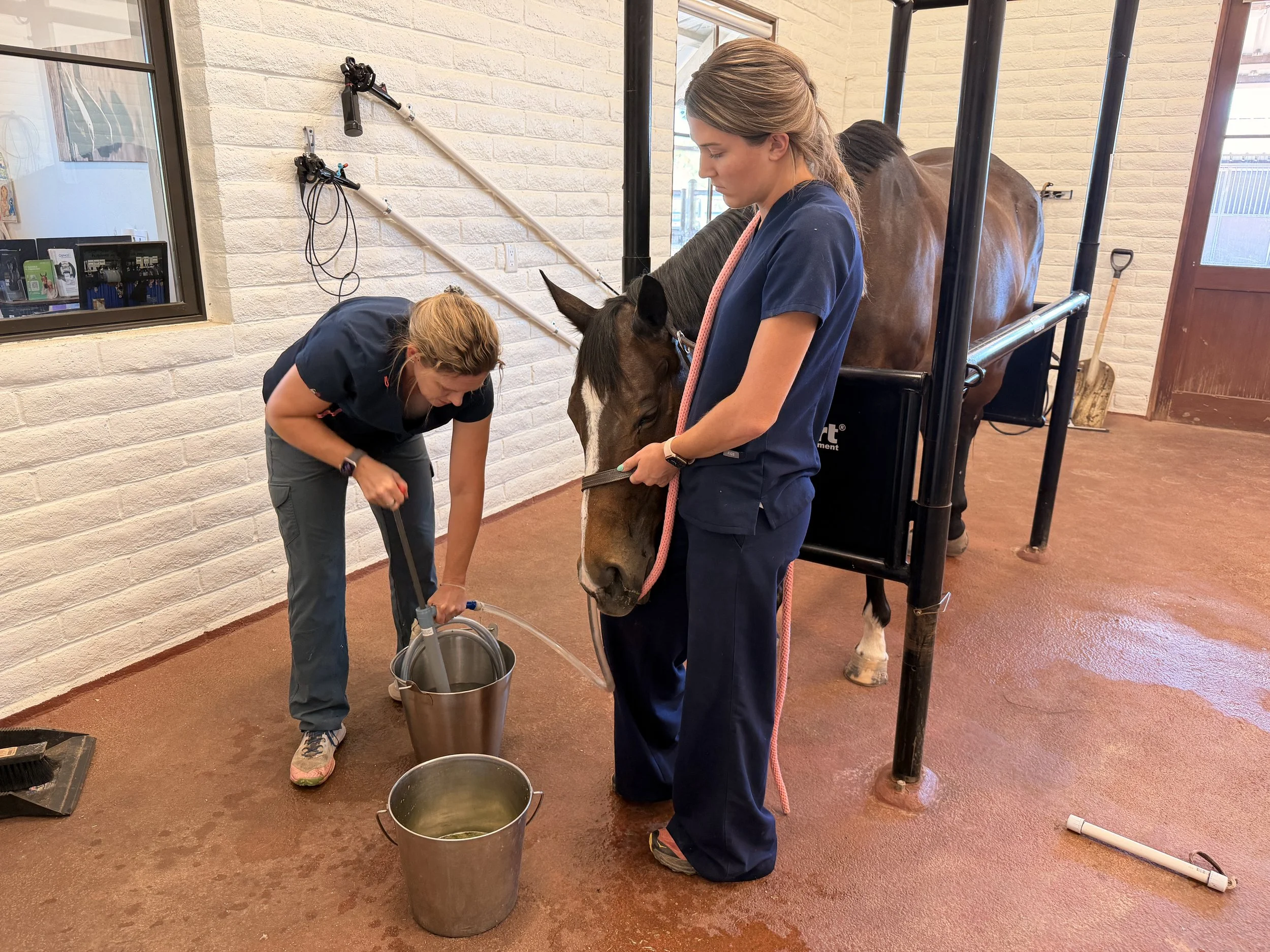
Dr. Autum and Vet Tech, Claire, performing nasogastric intubation on an emergency horse colic at Jackpot Veterinary Center in Tucson, AZ.
Colic refers to abdominal pain in horses. Most cases originate from problems within the stomach or intestines, but pain can also arise from other abdominal organs.
Colic can range from mild digestive discomfort to severe conditions that require emergency surgery. The challenge for horse owners is that mild cases and life-threatening cases may initially appear very similar, making prompt veterinary evaluation extremely important.
Why Does Colic Happen?
Horse colic can occur for many reasons, but most cases fall into three general categories:
1. Intestinal Dysfunction
This is the most common form of colic and includes:
Gas accumulation
Intestinal spasms
Impactions (blockages)
Reduced intestinal movement (motility)
Many cases of intestinal dysfunction respond well to medical treatment when addressed early.
2. Intestinal Accidents
These are more serious conditions and may include:
Intestinal twists (volvulus)
Entrapments
Loss of blood supply to the intestines
These conditions often become life-threatening and frequently require surgical correction.
3. Inflammation or Ulceration
Inflammation of the digestive tract may be caused by:
Stress
Certain medications
Infections
Parasites
These cases often require veterinary treatment and careful monitoring.
-
Early recognition can make a significant difference in your horse's outcome.
Mild signs of colic may include:
Reduced appetite or leaving feed behind
Depression or lethargy
Decreased manure production
Reduced intestinal sounds
Holding the head in an unusual position
Curling the upper lip
Lying down more frequently than normal
Even mild signs should be taken seriously and monitored closely.
-
As discomfort increases, horses may show more obvious signs such as:
Pawing at the ground
Looking at their flank
Kicking or biting at the abdomen
Stretching repeatedly as if attempting to urinate
Circling or repeatedly attempting to lie down
These behaviors typically indicate worsening abdominal pain and warrant a call to your veterinarian.
-
Severe colic is a veterinary emergency.
Watch for:
Rolling repeatedly
Throwing themselves to the ground
Sitting in a dog-like position
Heavy sweating
Rapid breathing with flared nostrils
Elevated heart rate
Marked abdominal distension
Absence of intestinal sounds
If your horse displays any of these symptoms, contact a veterinarian immediately.
What Should You Do If Your Horse Has Colic?
If you suspect your horse is colicking:
1. Call Your Veterinarian Immediately
Early intervention often improves outcomes and may prevent a condition from becoming more serious.
2. Remove Feed
Remove hay, grain, and treats until your veterinarian provides guidance.
3. Leave Water Available
Fresh water should remain accessible unless your veterinarian advises otherwise.
4. Observe Your Horse Closely
Monitor changes in behavior and symptoms. Keep your horse in a safe area where you can watch them carefully.
5. Walk the Horse if Necessary
If your horse is continually rolling or may injure itself, controlled walking may help keep them safe until veterinary assistance arrives.
Important Information to Have Ready for Your Veterinarian
When calling your veterinarian, be prepared to provide:
Description of colic symptoms
Severity of signs
Frequency of manure production
Recent dietary changes
Recent changes in housing or exercise
Current medications
Previous history of colic
If safely possible, additional information may include:
Heart rate
Respiratory rate
Rectal temperature
Gum color and moisture
Capillary refill time
Presence or absence of gut sounds
What NOT to Do During a Colic Episode
Many well-intentioned actions can worsen the situation.
Do NOT:
Administer medications without veterinary guidance
Attempt to pass a stomach tube
Force liquids or substances into the horse's mouth
Insert anything into the rectum
Give intravenous injections without veterinary instruction
Always consult your veterinarian before attempting any treatment.
How Veterinarians Diagnose Colic
A veterinary examination may include:
Complete physical examination
Review of medical history
Assessment of heart rate and hydration
Evaluation of gum color and circulation
Listening to intestinal sounds
Rectal palpation
Nasogastric tube placement
Bloodwork
Ultrasound examination
Abdominal fluid analysis in select cases
These diagnostic tools help determine the underlying cause and guide treatment recommendations.
Treatment Options for Horse Colic
Treatment depends on the specific cause and severity of the condition.
Common treatments may include:
Pain medications
Sedatives
Intravenous fluids
Fluid administration through a stomach tube
Mineral oil or other laxatives
Anti-inflammatory medications
Surgical intervention when necessary
The sooner treatment begins, the greater the likelihood of a successful outcome.
How to Prevent Colic in Horses
While not all cases are preventable, good management significantly reduces risk.
Provide Fresh, Clean Water
Dehydration is a common contributor to impaction colic.
-
Some mild cases may resolve with medical treatment and monitoring, but it is impossible to determine the severity of colic without veterinary evaluation. Always contact your veterinarian.
-
Intestinal dysfunction, including gas buildup, spasms, impactions, and reduced intestinal motility, is the most common cause.
-
Walking may help keep a horse safe if it is attempting to roll violently. However, follow your veterinarian's recommendations and avoid exhausting the horse.
-
Yes. Every colic episode should be considered potentially serious until evaluated by a veterinarian
-
While not every case can be prevented, proper feeding, hydration, parasite control, dental care, and consistent management significantly reduce the risk.