
Periodontal Disease in Cats & Dogs: Why Dental Health Matters
Bad breath might seem like a normal part of having a dog or cat, but sometimes it is your first clue that something more is happening below the gumline.
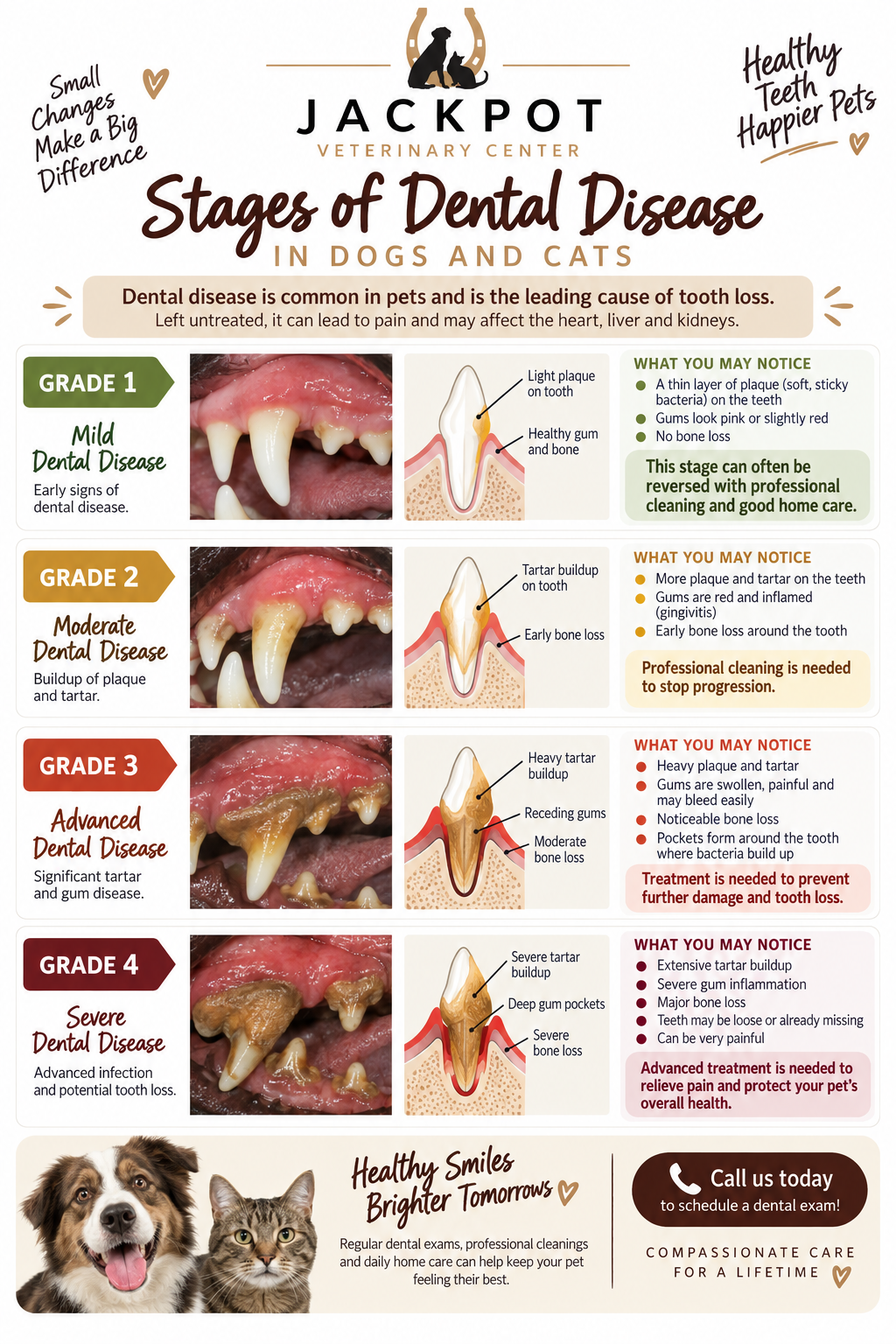
Periodontal disease is the most common dental condition in dogs and cats. In fact, according to the American Veterinary Medical Association (AVMA), most pets will have some evidence of periodontal disease by the time they are three years old. Without preventive care and treatment, dental disease can continue to worsen as your pet ages, potentially leading to pain, infection, bone loss, and tooth loss.
And dental health isn't only about your pet's mouth. Periodontal disease has also been associated with changes in the kidneys, liver, and heart, which is another reason we consider dental care an important part of your pet's overall health.
How Does Dental Disease Start?
It usually begins with plaque, a sticky layer of bacteria that builds up on the teeth. When plaque isn't removed, it can harden into tartar.
The tartar you can see above the gumline is only part of the picture. Plaque and tartar can also build up below the gumline, where they can lead to inflammation, infection, and damage to the bone and tissues that hold the teeth in place.
This is one reason your pet's mouth may look better from the outside than it actually is. Dental X-rays can help your veterinarian see what's happening around the tooth roots and below the gums, where much of dental disease occurs.
What Do Dental Grades Mean?
Veterinary teams use dental grades to describe how far periodontal disease has progressed. You may hear your veterinarian describe your pet's dental health on a scale from Grade 0 to Grade 4, with Grade 0 representing a healthy mouth and Grade 4 representing severe periodontal disease.
Grade 0: Healthy
The teeth and gums are healthy, without signs of periodontal disease. This is where we want to keep them! Regular exams and at-home dental care can help prevent plaque and tartar from progressing.
Grade 1: Mild Dental Disease
At this early stage, you may notice some tartar along with gums that look slightly red or swollen. The good news is that there is not yet significant loss of the bone or tissue supporting the teeth.
Catching dental disease at this stage gives us an opportunity to address it before permanent damage develops.
Grade 2: Early Periodontal Disease
At Grade 2, inflammation has progressed and there may be early bone loss around the roots of the teeth. Small pockets can also begin forming between the tooth and gum. Some of these changes aren't visible just by looking in your pet's mouth and may only be seen with dental X-rays.
Grade 3: Moderate Periodontal Disease
Grade 3 means there has been more significant damage to the structures supporting the teeth. Gums may be very inflamed, pockets around the teeth become deeper, and teeth may begin to loosen.
Interestingly, Grade 2 and Grade 3 disease can sometimes look fairly similar from the outside. Dental X-rays can reveal the more significant bone loss occurring beneath the gums.
Grade 4: Severe Periodontal Disease
Grade 4 is the most advanced stage. Pets may have significant tartar buildup, receding and inflamed gums, extensive bone loss, damaged or loose teeth, or teeth that have already been lost. This stage can be painful and requires treatment to address infection, discomfort, and damaged teeth.
Signs Your Pet May Have Dental Disease
Pets can't tell us when a tooth hurts, and some continue eating even when they have significant dental disease. That's why regular exams are so important.
Don't wait for your pet's next yearly visit if you notice:
Bad breath
Red, swollen, or bleeding gums
Heavy tartar or discolored teeth
Broken or loose teeth
Drooling more than usual
Dropping food while eating
Chewing differently or favoring one side of the mouth
Reduced appetite or refusing food
Pain around the mouth or face
Swelling around the mouth or face
Changes in behavior or increased irritability
These can all be signs that your pet's mouth deserves a closer look.
What Can You Do to Protect Your Pet's Teeth?
One of the easiest places to start is your pet's yearly wellness exam. The AVMA recommends having your pet's teeth and gums checked by a veterinarian at least once a year so problems can be identified early.
At home, regular tooth brushing is one of the most effective ways to remove plaque between professional cleanings. Daily brushing is ideal, but brushing several times a week can still be beneficial. Be sure to use products made specifically for pets, and talk with your veterinarian before choosing dental treats, diets, or other dental products.
When a professional dental cleaning is recommended, it allows the veterinary team to clean above and below the gumline, evaluate each tooth, and use dental X-rays when needed to look for problems that can't be seen during a regular exam.
Don't Wait Until Dental Disease Is Obvious
Dental disease tends to progress over time, so catching changes early can make a big difference. A mouth that looks relatively normal at home can still have disease developing below the gumline.
If you've noticed bad breath, tartar buildup, changes in the way your pet eats, or you're simply not sure how healthy their teeth are, call Jackpot Veterinary Center to schedule an exam. We can take a look at your pet's mouth and help you determine what they need to keep their smile — and the rest of them — as healthy as possible.